
Sintering is an effective method to get high-performance silicon carbide ceramic. While selecting the silicon carbide ceramic, you might have been confronted with various forms of it. There is one form of silicon carbide ceramic named reaction-bonded silicon carbide or RBSiC. RBSiC is extensively used in various industrial fields. For quite a long time, the superiority of RBSiC has been well-proved in the domains of metallurgy and photovoltaic devices.
This article will guide you through RBSiC, including its processes, performance, and applications, helping you achieve precise improvements in production efficiency.
Definition and Process of RBSiC
The full name of RBSiC is reaction bonded silicon carbide. It involves an in-situ reaction between free carbon and liquid silicon at high temperatures. Without high pressure, the infiltration process of silicon into the carbonaceous green body occurred through capillary action in a protective atmosphere at a range of temperatures from 1500 to 1800℃. The silicon then reacts with the free carbon to form new SiC crystals, while the remaining silicon fills the residual pores, achieving densification.
The preparation process is shown below. It is the standard method for the vast majority of reaction-bonded silicon carbide products.

 Process of Reaction Bonded Silicon Carbide
The silicon carbide thus produced always has a remnant silicon content of around 10%, and sometimes even more than 15%. This, therefore, is not pure silicon carbide ceramic materials that are made by this method. Technically, RBSiC is a composite mixture of silicon and silicon carbide, and is thus also referred to by another name, SiSiC.
Key Characteristics of RBSiC
In addition to the excellent properties of silicon carbide itself, RBSiC also has some other advantages.
Low Sintering Temperature
The sintering temperature of RBSiC is about 1450-1600℃, significantly lower than other processes such as pressureless sintering (>2000℃) or recrystallized sintering (>2200℃). This results in lower energy consumption and reduced production costs.
High Dimensional Accuracy
The reaction bonding process is a near-net-shape sintering technique. This means there is almost no shrinkage or dimensional change during the sintering process (typically <3%). Therefore, this process is perfectly suited for manufacturing large-scale and complex-shaped silicon carbide ceramic products, such as crucibles and saggars.
Furthermore, RBSiC product dimensions are easy to control, requiring minimal allowances for post-processing or machining.
Excellent Mechanical Properties
With a Mohs hardness of 9.5 and a flexural strength of ≥350 MPa, RBSiC maintains structural stability under severe friction and high impact. Its wear rate is significantly lower than that of metals and traditional refractory materials.
This is why wear-resistant RBSiC parts can help you extend the service life of equipment used in grinding and conveying applications. Using RBSiC can effectively reduce the frequency of part replacements.
Superior Thermal Performance
RBSiC can operate long-term at high temperature up to 1380℃. It can also withstand rapid temperature fluctuations without cracking, preventing failure caused by thermal expansion and contraction.
Due to low CTE and high elastic modulus, RBSiC is ideal for space mirrors and optical reflective components.
Adaptability for Your Complex Structural Manufacturing
RBSiC can be formed through various methods such as slip casting and pressing, making it suitable for producing components with complex shapes. This includes large-scale production of irregularly shaped parts such as spiral nozzles, heat exchangers, and kiln furniture.
The table below shows key performance parameters of RBSiC. You can refer to this table to decide whether to use RBSiC in your industry.
| Item | Unit | Data |
| RBSiC (SiSiC) | ||
| Max Service Temperature | ℃ | 1,380 |
| Density | g/cm3 | 3.02 |
| Open Porosity | % | 0 |
| Bending Strength 20℃ | Mpa | 250 |
| Bending Strength 1200℃ | Mpa | 280 |
| Modulus of Elasticity 20℃ | Gpa | 330 |
| Modulus of Elasticity 1200℃ | Gpa | 300 |
| Thermal Conductivity 1200℃ | W/m.k | 45 |
| Coefficient of Thermal Expansion | K–1x10⁻⁶ | 4.5 |
| HV | kg/mm2 | 2,115 |
Limitations
However, the remaining free silicon from the sintering process is likely to affect the performance in specific applications.
Temperature Constraints: At temperatures beyond 1380℃, the strength of RBSiC will deteriorate. The reason is that the free silicon will start melting.
Chemical Vulnerability: Free silicon is vulnerable to attack by strong acids and bases. This creates constraints on the application in chemical environments.
Physical Properties: The density of the ceramics formed by the sintering process will be lower, and there will be more pores compared to others. This leads to a considerable loss in performance for any mechanical application that requires a greater hardness.
Core Applications of RBSiC
In recent years, the ongoing development of reaction sintering technology has established it as an important method for manufacturing advanced materials.
RBSiC High-Temperature Parts for Your Metallurgy and Ceramic Kilns
RBSiC parts, like high-temperature kiln furniture and rollers, offer a service life 5 to 10 times longer than that of traditional refractory materials. It means reduced maintenance frequency and downtime. Especially in the sintering of lithium battery materials, these components significantly reduce your downtime.

 RBSiC Kiln Furniture Applications
RBSiC Wear-Resistant Parts for Your Chemical Engineering
Bearings, seals, and other RBSiC components perform exceptionally well in the high-wear and high-corrosion environments, typically in pumps and valves. They can resist heavy corrosion when handling acidic or alkaline waste liquids and during high-temperature gas purification. It mitigates the risk of leakage and reduces the replacement costs of sealing parts.

 RBSiC Seal Rings and Bushing in Different Specifications
High-Purity RBSiC Parts for Your Semiconductor Manufacturing
In recent years, as wafer sizes and heat-treatment temperatures have increased, RBSiC has gradually replaced quartz glass components. Utilizing high-purity silicon carbide powder and high-purity silicon, it is possible to manufacture high-purity RBSiC parts containing a specific silicon phase.
Possessing high purity, high-temperature stability, and dimensional precision, RBSiC is widely used in support fixtures for vacuum tubes and semiconductor wafer fabrication equipment.

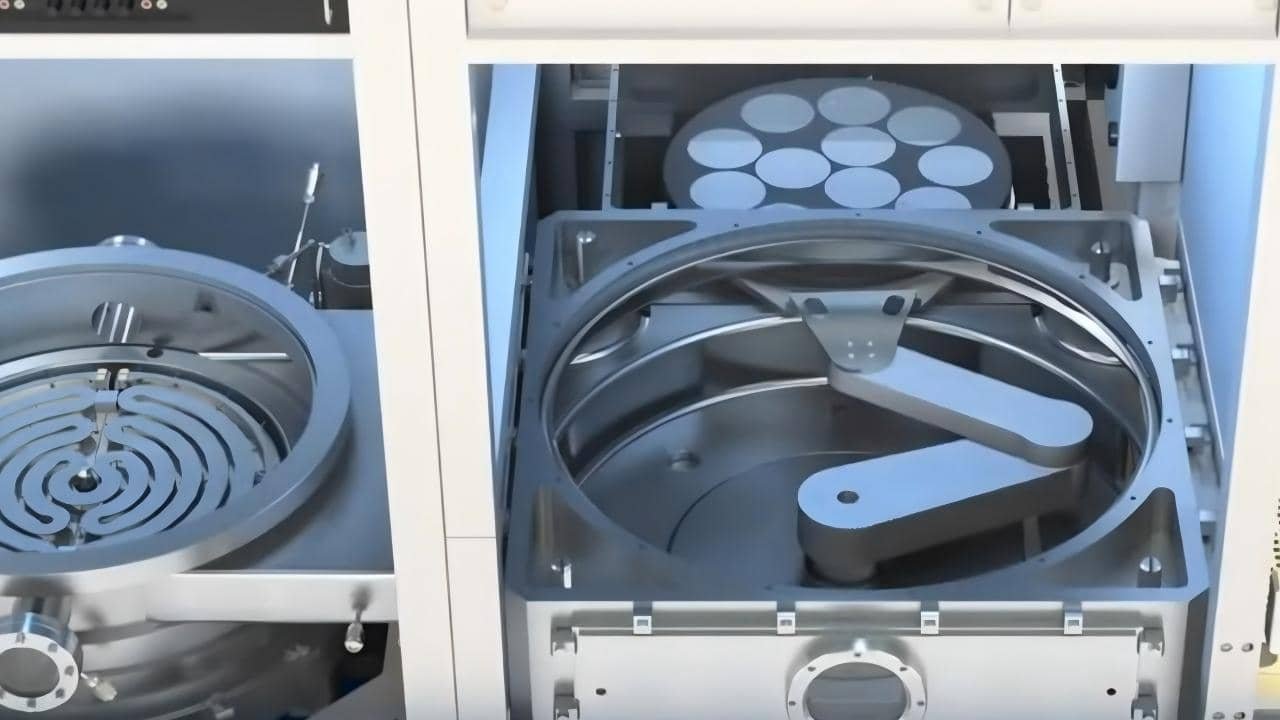 RBSiC Parts in Semiconductor Manufacturing
Lightweight RBSiC for Your Aerospace and Energy Sectors
The lightweight RBSiC, combined with its suitability for extreme working conditions, makes it a necessary part for spacecraft thermal protection systems and high-performance nozzles. RBSiC serves as an excellent alternative to metallic materials.
In power plants, RBSiC leverages its thermal and chemical stability for wide use in heat exchangers and burner nozzles.

 Drawing of RBSiC Burner Nozzle
Conclusion
RBSiC meets the demands of harsh modern industry while maintaining exceptional performance. With ongoing process upgrades, the performance limitations of RBSiC are being continuously addressed. In the future, it will continue to improve the production of more high-end industries.
If you want to purchase RBSiC parts for your industry, you can contact Newthink New Materials for more information and get an instant quote.
Thank you for reading. Hope this article will be helpful.
FAQs
- What is reaction-bonded silicon carbide?
RBSiC is a composite material made by infiltrating a porous carbon with a liquid silicon material. The silicon reacts with carbon in-situ to produce new SiC material that fills the pore spaces and forms a near-net shape.
- What is another name for silicon carbide?
It is also known as Carborundum.
RBSiC is also called siliconized silicon carbide (SiSiC).
- What is the difference between sintered and reaction-bonded silicon carbide?
The main differences lie in the sintering temperature and purity. SSiC requires higher temperatures (>2000℃) and is more pure. RBSiC is fired at lower temperatures (1450–1600℃) and contains about 10-15% residual metallic silicon.
- What are the different types of silicon carbide?
The primary industrial types include: RBSiC/SiSiC (Reaction Bonded), SSiC (Sintered/Pressureless Sintered), RSiC (Recrystallized), and NSiC (Nitride Bonded).
- Is silicon carbide bulletproof?
Yes. Due to its extreme hardness and low density, it is a premier material for ballistic armor plates used in bulletproof vests and vehicle shielding.
- What is the main use of silicon carbide?
SiC finds application mainly as an abrasive, kiln furniture for high-temperature metallurgy, and chemical pump and valve wear-resistant components. Another area of increasing importance for SiC includes semiconductor substrates and aerospace optical mirrors.


 English
  Spanish
  Portuguese
  German
  Arabic
