
Silicon carbide or SiC is an advanced ceramic material. It is mainly used in high-temperature wear and corrosive industries. Its products are growing more popular in modern industry because of their excellent performance.
Silicon carbide is not perfect for every condition though. You may wonder if it fits your project well. This article will introduce the advantages and disadvantages of silicon carbide ceramic material. After the reading, you can quickly assess whether silicon carbide meets your industrial expectations.
Advantages of Silicon Carbide
Excellent High-Temperature Stability
One of the reasons why silicon carbide is widely used is its excellent high-temperature stability. Silicon carbide has a melting point of 2700℃. It can maintain its strength and resist deformation in extremely high temperature of 1600℃.
If your industry includes high-temperatures operation, such as high-temperature kiln or aerospace, silicon carbide ceramic is reliable for you. They will provide stable performance to help you reduce the degradation caused by extreme heat.

 Silicon Carbide Rollers for High-Temperature Kiln Use
High Hardness and Strength
The Mohs hardness of silicon carbide is 9.5. It is only less hard than diamond, which makes silicon carbide very resistant to wear.
Silicon carbide ceramics are suitable for equipment that is likely to wear down. Whether mechanical seals, nozzles, or bearings, wear-resistant components made of silicon carbide will effectively resist frictional wear as well as extend service life remarkably. Using silicon carbide can help you reduce the frequency and cost of component replacements.

 Silicon Carbide Wear-Resistant Parts
Thermal and Electrical Conductivity
The thermal conductivity of silicon carbide ceramic materials at room temperature can reach 90-230 W/(m·K). It is several times that of alumina ceramics. If your project needs components with efficient heat dissipation, silicon carbide can suit it. Silicon carbide can enhance cooling efficiency and prevent equipment damage due to overheating.
Moreover, high-purity silicon carbide ceramic possesses excellent electrical insulation as well as semiconducting properties. Such a combination allows them be used for insulating parts in semiconductor equipment, or manufacture high-frequency, high-efficiency electronic devices. In any way, silicon carbide satisfies a wide range of electrical project requirements.

 Drawing of Silicon Carbide Semiconductor Chuck
Corrosion Resistance
In addition to good thermal and electrical properties, silicon carbide also exhibits excellent chemical inertness, providing excellent resistance to many corrosive materials. There is less than 0.01mm of material lost through corrosion each year when using silicon carbide parts in corrosive conditions.
If your project is in highly corrosive activities such as chemical processing or desulfurization, using silicone carbide parts like nozzles and liners will greatly increase the service life of your equipment, as the parts do not need to be replaced as often and therefore reduce maintenance costs.

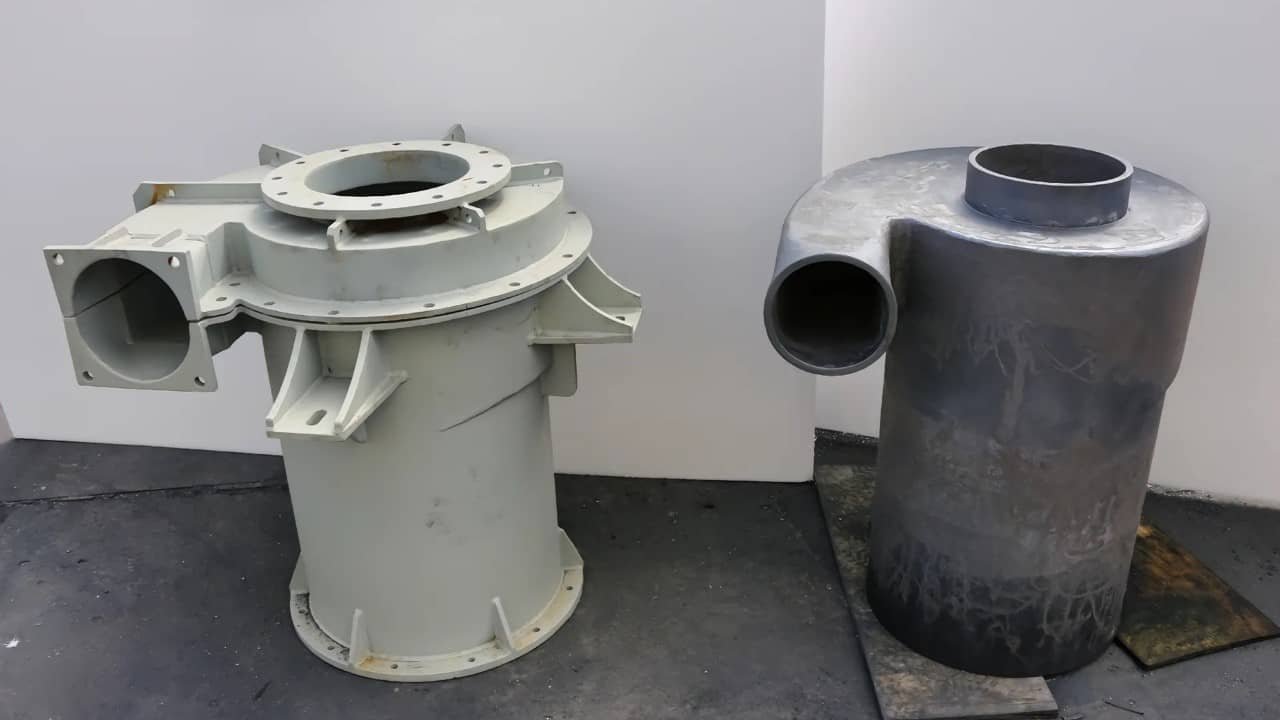 Silicon Carbide Cyclone Lining for Corrosive Industry
Disadvantages of Silicon Carbide
Silicon carbide is not without its advantages. Due to limitations in manufacturing processes, silicon carbide also has some drawbacks that you must consider.
High Brittleness
The biggest limitation of silicon carbide is its brittleness. It means that silicon carbide cannot withstand severe impacts. Silicon carbide does indeed process a fracture toughness higher than Al2O3 ceramic material, but is still not as good as that of Si3N4 ceramic material. Facing impact or stress, silicon carbide is easy to fracture. Thus, you should take an extra care during using silicon carbide to avoid the damage caused by impact.

 Silicon Carbide Brick Breaks After Being Subjected to Strong Impact
High Manufacturing Costs
The production cost of silicon carbide ceramics is relatively high, particularly for high-purity or single-crystal silicon carbide. They involve complex preparation processes and workflows. Besides, the requirements for equipment and technique are extremely stringent. So the price of the silicon carbide itself remains elevated.
You need to carefully weigh your requirements against the budget to determine if silicon carbide is the perfect choice.
High Processing Difficulty
While silicon carbide’s extremely high hardness provides excellent wear resistance, it also makes machining processes such as cutting, drilling, and grinding difficult. These processes require specialized diamond tooling. During processing, tools wear down rapidly, further increasing costs and cycles.
Precision machining of silicon carbide is more challenging. Fine details are difficult to control. The technical requirements for the machining process are more and more strict.
Conclusion
After the reading, do you get a better understanding of silicon carbide and its advantages and disadvantages? Simply say, if you need a ceramic with exceptional high-heat dissipation, high-temperature stability, and has superior wear and corrosion resistance, then silicon carbide is perfect for you.
You can determine if silicon carbide will meet your needs by the table of the performance of silicon carbide ceramic materials below. Or reading our previous article.
| Item | Unit | Data | |||
| RBSiC (SiSiC) | NBSiC | SSiC | RSiC | ||
| Max Service Temperature | ℃ | 1,380 | 1,450 | 1,650 | 1,620 |
| Density | g/cm3 | 3.02 | 2.75-2.85 | 3.08-3.16 | 2.65-2.75 |
| Open Porosity | % | 0 | 13-15 | 0 | 15-18 |
| Bending Strength 20℃ | Mpa | 250 | 160 | 380 | 100 |
| Bending Strength 1200℃ | Mpa | 280 | 180 | 400 | 120 |
| Modulus of Elasticity 20℃ | Gpa | 330 | 580 | 420 | 240 |
| Modulus of Elasticity 1200℃ | Gpa | 300 | / | / | 200 |
| Thermal Conductivity 1200℃ | W/m.k | 45 | 19.6 | 100-120 | 36.6 |
| Coefficient of Thermal Expansion | K-1x10⁻⁶ | 4.5 | 4.7 | 4.1 | 4.69 |
| HV | kg/mm2 | 2,115 | / | 2,800 | / |
If you have further questions, you can contact Newthink New Materials to discuss your needs. With 14+ years of experience in the advanced ceramics, Newthink will recommend the most suitable advanced ceramic products, silicon carbide, alumina, or boron nitride, tailored to your specific operating conditions.
Thanks for your reading. Hope this article will be helpful.
FAQs
- Can silicon carbide stop a bullet?
Yes. Silicon carbide armor plate can shatter projectiles. It is now a standard material for ballistic armor.
- What can dissolve silicon carbide?
Silicon carbide is inert to most acids and alkalis. But it can be dissolved by molten alkalis like sodium hydroxide, or attacked by fluorine gas at high temperatures.
- Is silicon carbide flammable?
No. Silicon carbide is non-flammable. Its products can be used in high-temperature kilns with a high melting point of 2700℃.
Reference
[2] Harris, G. L. (Ed.). (1995). Properties of silicon carbide (No. 13). Iet.


 English
  Spanish
  Portuguese
  German
  Arabic
