
As ballistic technology evolves, the demand for lightweight and high-hardness armor redefine the manufacturing standards for ballistic plates. For protection equipment producers, choosing materials that successfully dissipate bullet energy while reducing production weight is the most effective way to meet the rigorous safety standards of modern defense and security forces. Understanding the characteristics of different ballistic materials will helpful for you to choose the most suitable one for your industry. You can get insight into the latest trends in modern armor technology meanwhile. In this article, we will explore the 4 mainstream materials used in the global ballistic field, discussing their pros, cons, and ideal use cases.
Traditional Metal: Ballistic Steel
Ballistic steel is usually made from high-hardness alloy steel. It is the most mature material with the longest history in the protection field. Relies on its high strength and hardness, ballistic steel can directly consume the momentum of an bullet.
The primary advantage of ballistic steel is its very low cost. It is the most budget-friendly choice among all ballistic materials. Besides, ballistic steel provides durable multi-hit capability. The plate can maintain its structural integrity after being struck many times. Moreover, steel plates can be stored for long time without a special environment. As long as they are kept from rusting, they can remain without any loss in performance.
However, steel plate has an extreme weight. It is several times heavier than ceramic or plastic plates of the same protection level. When used for personnel, steel brings a safety risk. Upon impact, a bullet will shatter and send fragments to all directions. They will injure the personnel’s neck or arms without special coating.
Despite its weight, the outstanding cost-effective ratio makes ballistic steel a popular choice for vehicles and static defense locations where weight is not a concern.
Synthetic Fibers: Aramid & UHMWPE
With the advancement of the chemical industry, the emergence of lightweight synthetic fibers has made high-performance, lightweight protection a reality.
Aramid
Aramid is a heat-resistant and strong synthetic fiber. Aramid fibers absorb impact energy through stretching and shearing motions.
Aramid has excellent thermal stability. In addition to ballistic resistance, it has flame retardancy, maintaining mechanical strength even in high-temperature environments. Aramid is primarily used in soft body armor, or backing material in hard armor plates to absorb impact energy.
Ultra-High Molecular Weight Polyethylene (UHMWPE)
UHMWPE is one of the lightest ballistic materials available today. It has an extremely low density, providing higher strength-to-weight ratio than steel one.
UHMWPE significantly reduces the load of the wearer. Some UHMWPE plates are even light enough to float on water. It is highly efficient at stopping common handgun rounds and high-speed fragments, top for those seeking maximum weight reduction.
On the other hand, UHMWPE is very sensitive to heat. Its strength drops significantly at temperatures around 80℃. Additionally, only using UHMWPE plates cannot provide effective protection against high-hardness armor-piercing rounds.
Special Ceramics: Advanced Ceramic Materials
When facing high-power, high-hardness rifle rounds, such as 7.62mm Armor-Piercing bullets, single metal or fiber materials often cannot balance weight and protection. Advanced ceramics, with their extreme hardness, have become the core of modern hard armor plates. Currently, three main types of ceramic materials are widely used.
Alumina (Aluminum Oxide)
Alumina is the most commonly used ballistic ceramic today. It possesses a mature manufacturing process, low cost, and sufficient hardness to stop most threats. But its high density makes the Al2O3 ballistic plates relatively heavy compared to other ceramic ones.
Silicon Carbide (SiC)
Silicon carbide is currently the most popular material in the ballistic industry. It is approximately 20% lighter than alumina with higher hardness. For applications requiring lightweight performance and high mobility, SiC is ideal for top-tier armor plates. It offers a perfect balance between cost, weight, and protection.

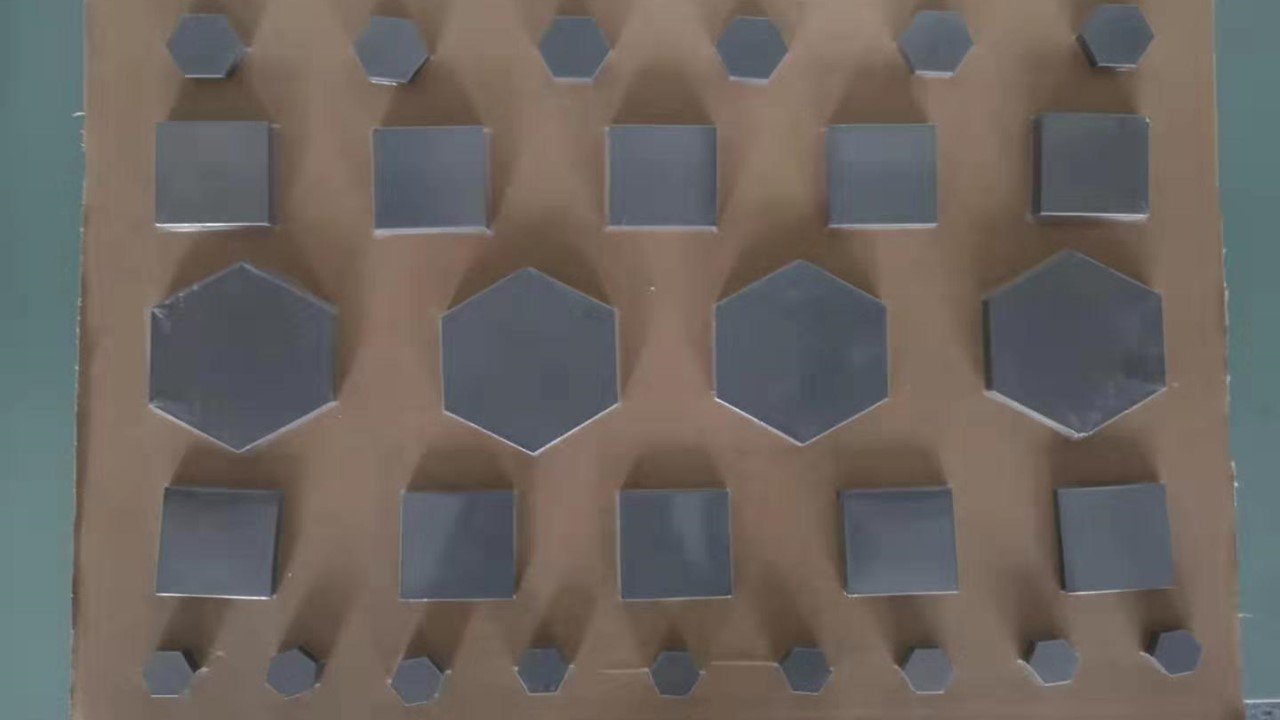 Bulletproof Plate Made of Silicon Carbide Material
Boron Carbide (B4C)
Boron carbide is the lightest and hardest ballistic ceramic. It offers the ultimate protection for the least weight, while extremely expensive and relatively brittle. Boron carbide armor plate is typically reserved for high-end aerospace armor or special forces equipment where performance is the only priority, and cost is not a concern.
The following table summarizes the characteristics of the materials mentioned above.
| Material | Density | Hardness | Durability | Limitations | |
| Ballistic Steel | Extremely High | Medium | Extremely Strong | Very heavy; risk of spalling | |
| Synthetic Fibers | UHMWPE Fiber | Extremely Low | Low (Not for AP) | Moderate | Not heat resistant; bulky thickness |
| Aramid Fiber | Low | Medium (Soft Armor) | Weak | Sensitive to moisture and UV light | |
| Advanced Ceramic | Alumina Ceramic | High | High | Brittle | Relatively heavy; weaker multi-hit capability |
| Silicon Carbide (SiC) | Low | Extremely High | Very Stable | Higher manufacturing cost | |
| Boron Carbide (B4C) | Extremely Low | Highest | Very Brittle | Extremely expensive | |
Why is Composite Structure Becoming the Trend?
Modern ballistic plates usually use a composite structure which combines ceramics and fibers. Ceramic layer like silicon carbide provides extreme hardness to shatter the bullet or deform its shape upon impact. At the same time, backing layer (PE or Aramid) catches the ceramic fragments and the remaining energy of the bullet to prevent penetration. The composite armor can stop high-velocity AP rounds, keeping the total weight meanwhile that can comfortably carry.
Modern protective armor does not only rely on a single material. It achieves the best protection by combining materials, along with different performance strengths. Steel, synthetic fibers, and advanced ceramics are all viable for ballistic application. The choice depends on your specific requirement and protection level you need. If you want to know more about ballistic materials, please read our previous article.
NIJ Ballistic Protection Levels
| Level | Armor Category | Typical Materials / Form | Concealable? | Example Threats |
| IIA | Soft body armor | Textile/fiber soft armor (e.g., Kevlar layers) | Yes | 9 mm, .40 S&W (handgun rounds) |
| II | Soft body armor | Enhanced fiber soft armor | Yes | Short-barrel 9 mm, .357 Magnum (handgun rounds) |
| IIIA | High-performance soft armor | Multi-layer high-performance fibers or soft composite systems | Yes | .357 SIG, .44 Magnum (longer-barrel handguns) |
| III | Hard armor plates | Metal or composite hard plates (used as inserts) | No | 7.62 mm full-metal-jacket (FMJ) rifle bullets |
| IV | Hard armor plates (top military level) | High-hardness ceramic / composite multi-layer plates (with backing) | No | .30 caliber armor-piercing rifle rounds |
Thank you for reading. If you are looking for ballistic ceramic, feel free to contact Newthink New Materials. With 14 years of experience in advanced ceramic sector, NKM provide high-quality, customized silicon carbide ceramic ballistic plates. Visit our homepage to learn more.


