
High-temperature industrial manufacturing usually needs high-performance carbon & ceramic materials. Two examples of these are graphite and silicon carbide ceramics, which have numerous uses within high-temperature manufacturing industries due to their excellent stability under such conditions.
Though often used in similar industries, they feature distinct properties that define their best-fit applications. Choosing the wrong material leads to frequent part failures and higher operating costs. This article compares their performance, industrial uses and selection guidance to help you pick the optimal one for your process.
What is Graphite?
Graphite is a layered non-metallic carbon-based material with a stable hexagonal crystal structure. It possesses excellent thermal and electrical conductivity.
Standard graphite can maintain stability in vacuum or inert gas environments. It is light in weight, easy to machine into a variety of customized parts.
Its biggest drawback is poor oxidation resistance. Graphite will oxidize and degrade at around 450℃ in open air. This limits its use in high-oxygen and high-temperature working conditions.

 The Structure of Graphite
What is Silicon Carbide?
Silicon carbide, also known as SiC, is a high-performance structural ceramic material. Bonded by strong covalent bonds between silicon and carbon atoms, it possesses extreme hardness, superior chemical inertness and outstanding high-temperature oxidation resistance.
SiC ceramic remains stable against oxidation below 1,600℃. It also boasts reliable thermal shock resistance and wear resistance.
Unlike graphite, SiC is a semiconductor with lower electrical conductivity. It is perfect for an extreme industrial environment that requires long-term structural durability.

 Silicon Carbide
Graphite and Silicon Carbide: Performance Comparison
Here are 6 core industrial performance comparisons between graphite and silicon carbide.
High-Temperature & Oxidation Resistance
Graphite operates stably at temperatures up to 3,000℃ in vacuum or inert atmospheres. However, it performs poorly in open-air high-temperature conditions. Continuous exposure to open air above 450℃ leads to gradual oxidation and structural damage.
Silicon carbide ceramic supports long-term stable operation at 1,600℃ to 1,800℃ in open air. It forms a dense protective oxide layer on its surface at high temperatures to resist further oxidation and corrosion. This makes it far more dependable than graphite for open-air high-temperature production lines.
Thermal Conductivity & Thermal Shock Resistance
Graphite has an ultra-high thermal conductivity of up to 700 W/m·K. It heats evenly and dissipates heat rapidly. In vacuum environments, it also offers excellent thermal shock resistance, rarely cracks during rapid temperature fluctuations.
Silicon carbide ceramic has a thermal conductivity of 120-200 W/m·K. Though lower than graphite, this range still outperforms most traditional ceramic materials. It delivers reliable thermal shock resistance in open air without sudden cracking under repeated heating and cooling cycles.
Hardness & Wear Resistance
Graphite’s hardness is low. But it possesses unique self-lubricating properties. It wears moderately under friction, suiting working conditions that require lubrication rather than extreme wear resistance.
Silicon carbide ranks among the hardest industrial ceramic materials. Its hardness is second only to diamond and boron carbide. SiC delivers exceptional wear resistance and structural stability, ideal for long-cycle friction and cutting applications.
Electrical Conductivity
Graphite is an excellent electrical conductor. It works stably for induction heating components and conductive structural parts.
Silicon carbide has weak electrical conductivity, presenting typical semiconductor properties. It cannot replace graphite for conductive industrial structural components.
Chemical Resistance
Graphite resists most mild corrosive media but is vulnerable to strong oxidizing acids and high-temperature molten metal erosion. It may release impurities and cause contamination to your products.
Silicon carbide ceramic boasts extreme chemical inertness against strong acids, alkalis and molten metal corrosion. Its corrosion rate drops as low as 0.04 mg/cm2/year in high-temperature concentrated nitric acid, effectively maintaining ultra-clean production environments.
Service Life
Graphite comes with a low upfront cost. But it requires frequent replacement in open-air or corrosive working environments, leading to higher long-term maintenance expenses.
Silicon carbide components offer a service life 3-5 times longer than graphite under the same working conditions. Despite the higher initial investment, it significantly reduces your production downtime and part replacement frequency.
Industrial Applications & Selection Tips
Your working environment and process requirements are the key factors for material choice. Below are targeted applications and selection guides for different industrial manufacturing.
When to Choose Graphite Components?
Pick graphite if your production runs in a vacuum or an inert gas atmosphere. Its ultra-high thermal conductivity ensures uniform heating and efficient heat transfer, which can improve your overall production energy efficiency.
You can use graphite crucibles and heating elements for low-corrosion metal melting. Their conductive property supports direct induction heating, simplifying your equipment structure and cutting auxiliary power consumption.
Graphite is also your best choice for customized low-wear conductive parts. Its easy machining property helps you shorten component customization cycles and meet personalized production needs.

 Casting Hot Liquid Metal from Graphite Crucible
When to Choose Silicon Carbide Ceramic Components?
You need silicon carbide ceramic parts for all open-air high-temperature processes. Its excellent oxidation resistance avoids frequent part aging and failure. It keeps your production line running stably for a long time.
If your production involves strong corrosive media or high-purity molten metal processing, SiC ceramic is your reliable solution. Its ultra-low impurity release prevents product contamination. It effectively improves your finished product yield.
You can apply SiC ceramic rods, crucibles and heat exchangers for long-cycle continuous production. Its superior wear resistance and structural stability reduce your equipment maintenance times. It saves you massive long-term operational costs.

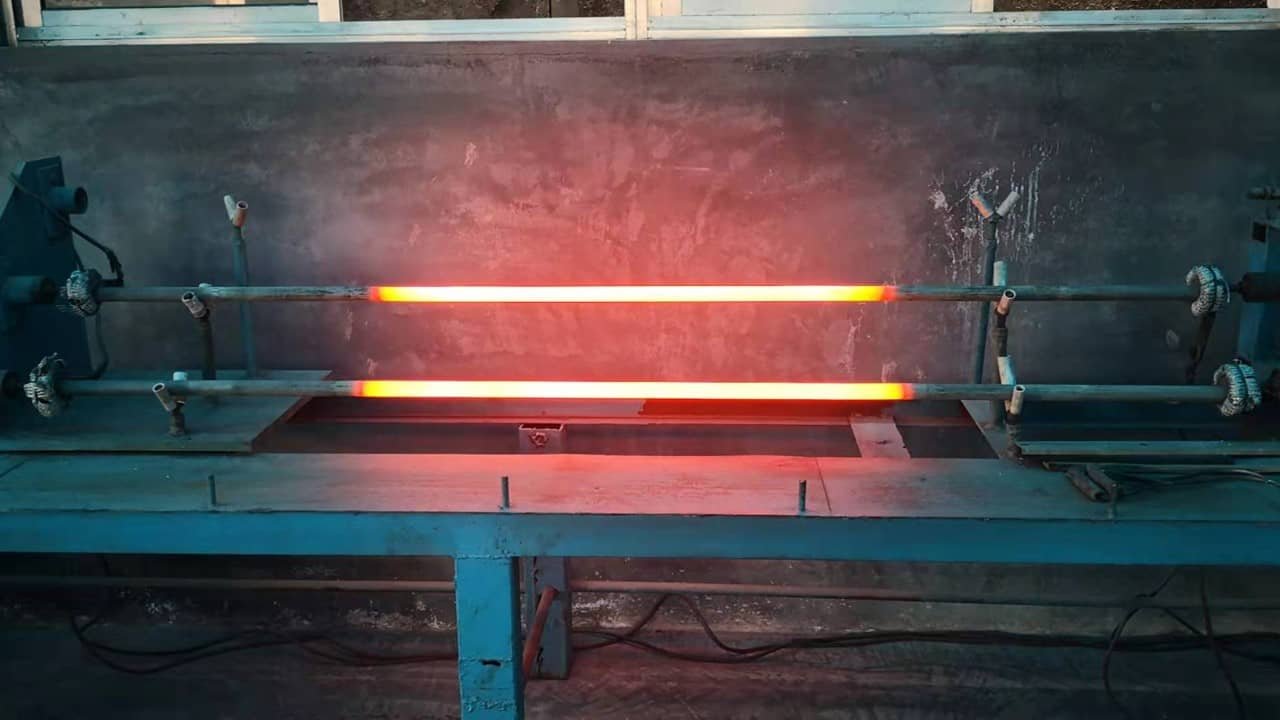 Silicon Carbide Heating Elements for Powder Metallurgy
Composite Application: SiC-Coated Graphite
Many manufacturers currently adopt SiC-coated graphite composite components. This innovative structure combines graphite’s high thermal conductivity and easy machinability with SiC’s superior oxidation and corrosion resistance.
You can apply these composite components to semiconductor wafer carriers, photovoltaic thermal susceptors and high-end furnace liners. They strike a perfect balance between performance and cost for your high-precision, extreme-condition manufacturing processes.
FAQs
Which material is better for open-air high-temperature furnace heating elements?
Silicon carbide ceramic. Graphite oxidizes rapidly in open air above 450℃ and has a short service life. SiC resists oxidation up to 1,600℃, delivering stable long-term operation.
Can graphite replace silicon carbide for corrosive liquid processing?
No. Graphite cannot resist strong oxidizing corrosion and high-temperature molten metal erosion. It causes impurity precipitation and product pollution. Silicon carbide’s chemical inertness suits all harsh corrosive processing.
Which material saves more long-term production cost?
Silicon carbide. It offers better long-term cost performance, though the initial purchase cost is higher. Silicon carbide provides a service life 3-5 times longer than graphite. It reduces your downtime loss and replacement labor costs significantly.
Is SiC-coated graphite worth adopting for precision manufacturing?
Yes. The composite structure makes up for graphite’s oxidation defects. It retains graphite’s thermal conductivity advantage, becoming the mainstream cost-effective choice for semiconductor and photovoltaic precision production.
Which material has better thermal conductivity for heat exchanger systems?
Pure graphite has higher thermal conductivity. It works better for vacuum heat exchange systems. Silicon carbide is more suitable for open-air and corrosive heat exchange environments with stricter stability requirements.
Conclusion
Graphite suits vacuum or inert manufacturing with high thermal conductivity and cost advantages. Silicon carbide, on the other hand, excels well in open-air, high-temperature, corrosive and high-wear industrial environments with superior stability and durability. Choosing the right material based on your actual conditions can effectively boost efficiency and cut long-term costs.
Searching for the best ceramic products suitable for your industry? Newthink New Materials is an experienced advanced ceramic supplier. We can provide you with high-quality silicon carbide ceramic products based on your demands. Contact us with your requirements to get an instant quote.


 English
  Spanish
  Portuguese
  German
  Arabic
