
Ceramic crucibles are made from ceramic materials like alumina and silicon carbide through high-temperature sintering, employed widely in calcination, melting, and precious metal processing. Having excellent high-temperature resistance, chemical stability, and electrical insulation, ceramic crucibles are the main containers for industrial high-temperature treatment.
Properly using ceramic crucibles will be helpful to extend their lifespan, while stabilizing your industrial production. This article will provide a complete guide on the precautions for using ceramic crucibles, helping you standardize operations and minimize loss.

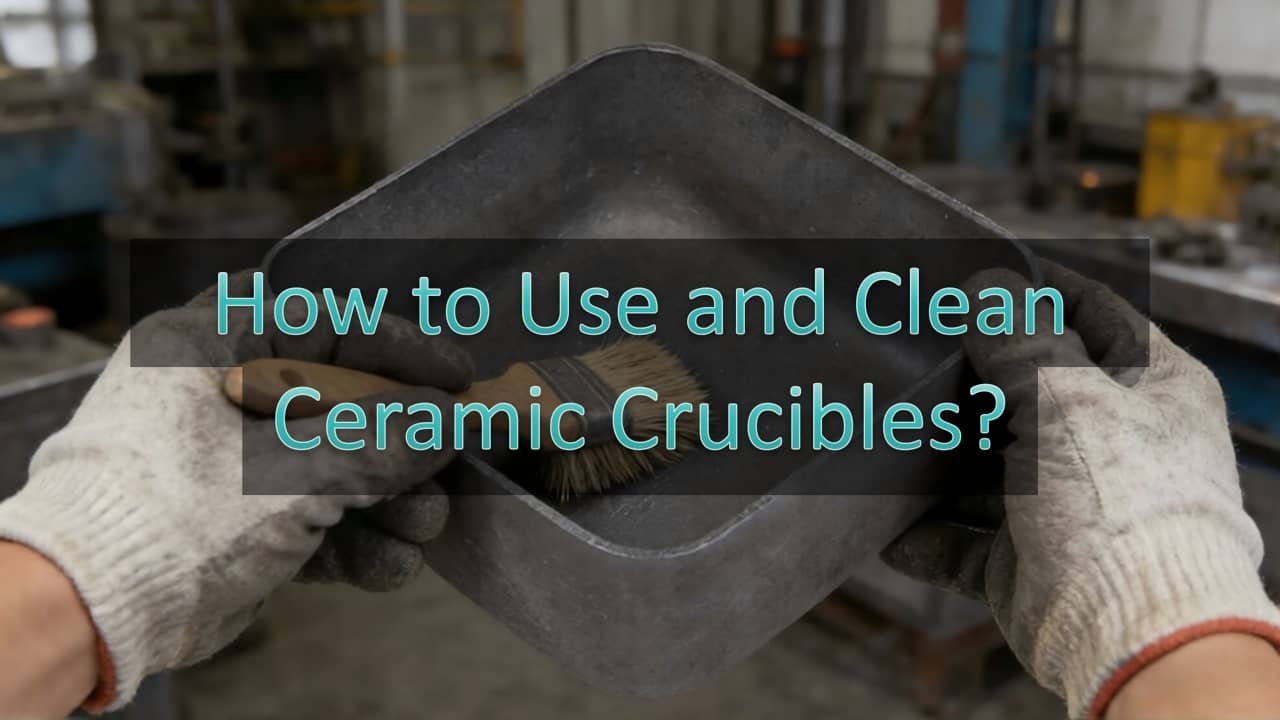 Cleaning Ceramic Crucible
Proper Usage of Ceramic Crucibles
Standard use of ceramic crucibles is important to operational safety. Below is a 4-step standard operating procedure. You may adjust some details based on the material of your crucibles.
a) Pre-use Inspection and Preparation
We recommend you conduct a comprehensive inspection before using a ceramic crucible.
First, examine the walls under strong light carefully. Check for cracks, bulges, and peeling. Even a microcrack will reduce thermal shock stability, bringing safety risks. Crucibles with any cracks must be replaced immediately.
New crucibles need preheating. Heat the crucible to about 500℃ and hold for 20 minutes. Then increase the temperature until it is red-hot, and cool it to room temperature naturally. This process will remove internal moisture and enhance thermal stability.
For crucibles used in quantitative analysis, they must be pre-dried at about 110℃. After weighing and recording the initial data, heat the crucible to the operating temperature and repeat the weighing until the mass loss between two weighings does not exceed 0.3%. Once a constant weight, the crucible is ready for use.
b) Loading Specifications
Proper loading is important to prevent contamination. Material should be less than 2/3 of the capacity to prevent overflowing during heating. Excess material may damage the furnace and endanger your safety.
You should select a crucible material compatible with your samples. For example, do not use ceramic crucibles for fluorine materials. If you need to load alkaline, ensure the material you select is chemically resistant to avoid corroding the crucible.
Different materials require different placements. Solid materials should be ground uniformly into fine particles and evenly spread on the bottom of the crucible to avoid local overheating. Liquid materials should be poured slowly to prevent splashing as much as possible.
c) Heating Operations
Placing the crucible in a low temperature for 5 to 10 minutes. Then, please heat under a gradually increased temperature to the desired temperature. It will reduce the risk of cracking caused by a sudden temperature rise.
The max heating temperature should be controlled strictly within the rated range of your crucible. Long-term usage under overtemperature will shorten its service life significantly.
The ceramic crucible should be placed on a clay triangle or a crucible stand when heating. Avoid the crucible contact directly with the heat source. Besides, cover the crucible with a lid to prevent dust and splashing.
d) Cooling
After heating, do not place a hot crucible directly onto a cold surface or into cold water. Transfer it to an asbestos wire gauze first to cool it naturally to room temperature. This can prevent fractures caused by rapid cooling.
For ceramic crucibles heated at high temperatures, cooling should be for at least 30 minutes. Adjusted the time according to your working temperature and the dimensions of the crucibles. During the cooling, do not touch the crucible. Be careful not to get hurt.

 Testing of the Ceramic Crucible
Cleaning Methods for Ceramic Crucibles
The cleaning of ceramic crucibles has 3 principles: selecting a method based on need, avoiding corrosion, and preventing damage. Different residues should use special cleaning methods. Please select based on the residues generated and production, ensuring thorough cleaning without damaging the crucible. This is an effective way to extend the service life of the crucible.
Routine Residue Cleaning
This method is used for ordinary solid powder residues or those that are easily soluble in water. It is suitable for high-volume cleaning tasks in your common industrial use.
When the crucible cools to room temperature, use a plastic scraper and remove solid residues gently. Do not use metal tools. They will scratch the surface, accelerating the corrosion in later uses.
After removing solid residue, inject an appropriate amount of deionized water into the crucible, soaking for 10 minutes. Then, slightly scrub the inner walls with a soft brush. After scrubbing, set the crucible in a drying oven at 110℃ to remove the moisture.
Cleaning of Insoluble Residues
Ordinary washing will not be sufficient if the crucible has insoluble inorganic residues like silicates or metal oxides. Chemical cleaning should be adopted.
Rinse the inner of the crucible with deionized water to remove dust. Add an appropriate amount of 1:1 diluted HCl and diluted HNO3, soak for 2 to 4 hours. You can heat the crucible in a water bath to accelerate the dissolution if required.
Rinse with deionized water until the liquid is neutral afterwards. Dry the crucible for future use.
For crucibles used in trace analysis, please conduct a secondary treatment with specialized cleaning solutions until no metal ions remain.
Cleaning of Stubborn Residues
For stubborn residues of carbides, metal, or grease, you can conduct the 2 cleaning methods.
High-Temperature Calcination
Place the pre-cleanned crucible in a muffle furnace. Calcine the ceramic crucible under 800-1,000℃ for 1-2 hours. This is to oxidize and decompose organic matter and carbon layers. After cooling, rinse with deionized water thoroughly.
Enhanced Chemical Cleaning (Do not use frequently)
If calcination cannot remove the residues, you can try this method. Soaking the crucible in a 1:1 mixture of diluted HCl and diluted HNO3. Due to the extreme corrosiveness, take strict protective measures during operation.
Limit the soaking time to under 1 hour. After soaking, rinse immediately with a large volume of deionized water. If not, the residual solution will corrode the ceramic crucible.
Post-Cleaning Treatment and Storage
After cleaning, please dry the crucibles immediately to prevent stains. Store them in a clean and sealed place. Do not get cricibles damp or dusty.
Use crucible racks or pads, separating ceramic crucibles without stacking them on top of one another. This can prevent collisions with each other.
Crucibles used for different uses should be stored under classification. A crucible applied to alkali fusion should never be used for acidic sample processing. Label to prevent cross-contamination.
Common Misconceptions in Usage and Cleaning
Ceramic crucibles are widely used in large industrial production. Wrong operating will lead to wear or failure. Here are 5 misconceptions about the industrial use of ceramic crucibles. You can check if you had the wrong actions before and correct them.
Skipping Preheating or Gradually Heating
Heating a ceramic crucible to a high temperature suddenly will cause cracking. The preheating step should never be omitted.
In one case, a factory experienced uneven preheating for a silicon carbide crucible. During rapid heating, the crucible cannot withstand the thermal stress, finally causing a crack.

 Silicon Carbide Crucible Broke at the Waist
Using Metal Tools for Cleaning
Scraping residues with metal tools will scratch the inner walls. It will cause the crucible to be more likely to experience material adhesion and corrosion, shortening service life drastically.
Using Wrong Cleaning Reagents
Inappropriate solutions can lead to the corrosion of the ceramic crucible. Please select the cleaning agent based on the residue type and the crucible material.
Wrong Cooling and Storage
Rapidly cooling a high-temperature crucible, storing without drying and separation… Wrong operations can all lead to cracking and contamination of the ceramic crucibles.
Neglecting Routine Inspections
Continuing to use a crucible with microcracks will cause a safety hazard. Inspect your crucibles carefully and regularly.
Conclusion
The proper use and cleaning of ceramic crucibles are the key to your industrial data accuracy and stable production process. By avoiding the common operational errors, you will get the ceramic crucibles with a longer service life. Under the proper environment and storage, they will fully leverage their benefits for your industry.
Do you need a precise ceramic crucible solution or a customized usage and cleaning solution? Contact Newthink New Materials for dedicated technical support. Newthink provides customized advanced ceramic solutions. Our silicon carbide, alumina, boron nitride, and any other crucibles will help you solve the challenges in industrial high-temperature processing.
Thanks for your reading. Hope this article will be helpful.

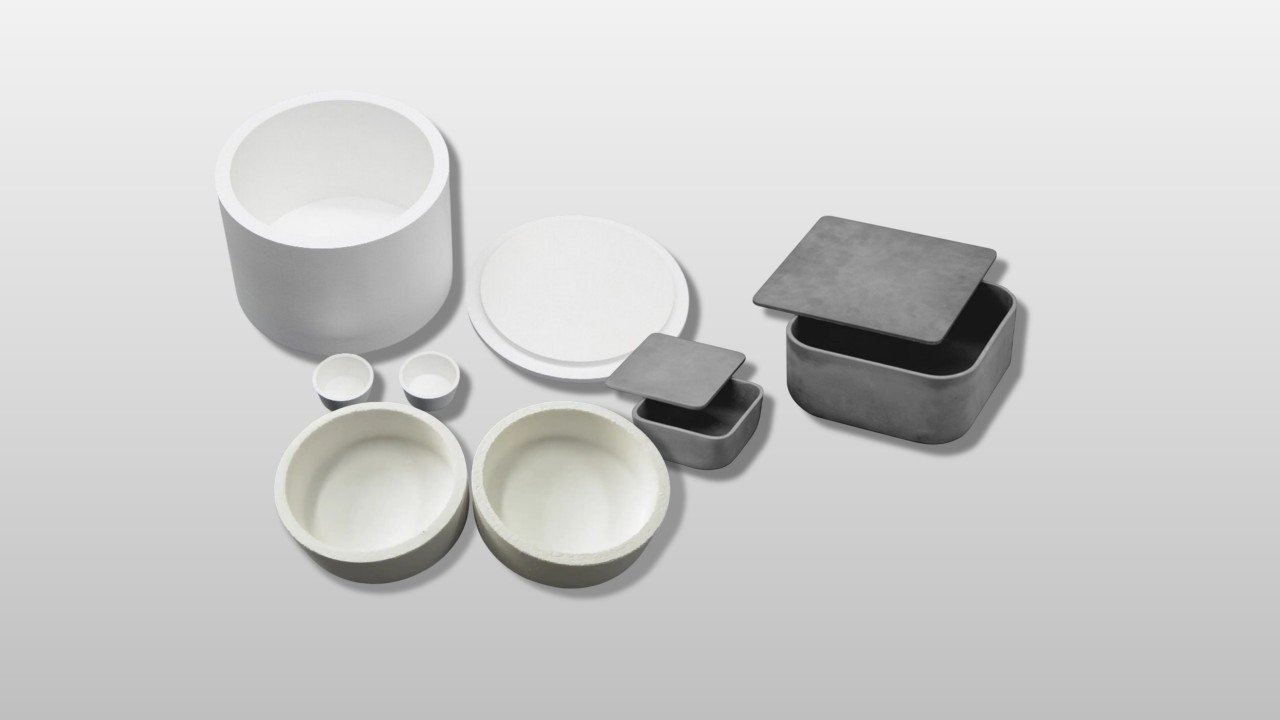 Different Types of Ceramic Crucibles
FAQs
- What is a ceramic crucible?
A ceramic crucible is a container for melting samples under high temperatures. They can withstand high thermal stress and chemical corrosion.
- Which is better, graphite or a ceramic crucible?
The two have different advantages. Graphite crucibles offer better thermal conductivity, heating more rapidly. Ceramic crucibles provide greater chemical inertness, ideal for melting high-purity alloys.
- How to clean a ceramic crucible?
Remove residues with a soft brush. For stubborn residues, soak the crucible in a specific cleaning agent. Then rinse thoroughly with distilled water and dry completely.
- Will ceramic crack in heat?
Yes. Rapid temperature changes cause uneven expansion.
- How to season a crucible for melting metal?
Heat the empty crucible slowly to 200℃ to remove moisture. Then gradually increase to the working temperature.
- How many times can you reuse a crucible?
Depends on the material and care. However, you must inspect them for cracks or thinning after every use to ensure safety.


