
A ceramic crucible is a bowl-shaped container used for solid materials melting, liquid material reactions and metals refining. As a container for high-temperature melts, it possesses excellent chemical stability and high-temperature resistance, making it perfect for metallurgy, semiconductor manufacturing, and many other fields.
There are various types of ceramic crucibles. They are mainly made from silicon carbide, alumina, boron nitride and many other advanced materials. You may doubtful for how to make a choice among these ceramic materials. This article will explore the properties, application and protections of ceramic crucibles, helping you to choose the most suitable one for your industries.
Typical Materials of Ceramic Crucible
Ceramic crucible made from different materials show various characteristics.
Alumina Crucible
Alumina ceramic crucibles are mainly made of 99.7% purity aluminum oxide, with trace amount of MgO and SiO2 for better stability.

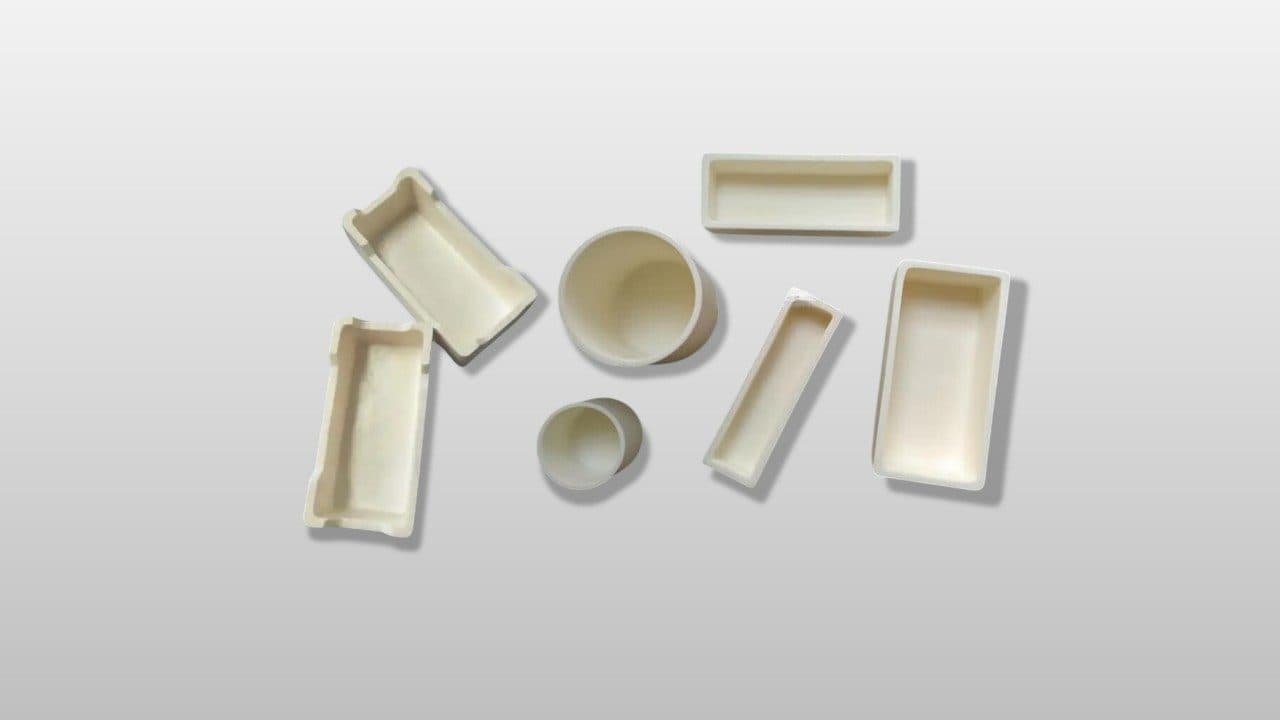 Alumina Crucible
Key Properties: High-purity alumina offers high density, resulting in a dense structure. The maximum working temperature of alumina crucible is up to 1,600℃, providing excellent high-temperature stability. Its superior corrosion resistance is helpful for against acidic molten salts.
Applications: Alumina crucibles are mainly used in metallurgy, metal smelting and chemical reactions.
Advantages: Alumina ceramic crucible is the most cost-effective ceramic crucibles for the modern industry. High mechanical strength, good insulation, and excellent heat dissipation make alumina crucible durable.
Limitations: Alumina has a weaker thermal shock resistance. It means that drastic temperature changes will produce cracks in alumina ceramic crucibles.
Silicon Carbide Crucible
Silicon carbide ceramic crucible is mainly composed of silicon carbide, manufactured using various processes like reaction sintering (RBSiC), pressureless sintering (SSiC), or recrystallization sintering (RSiC).

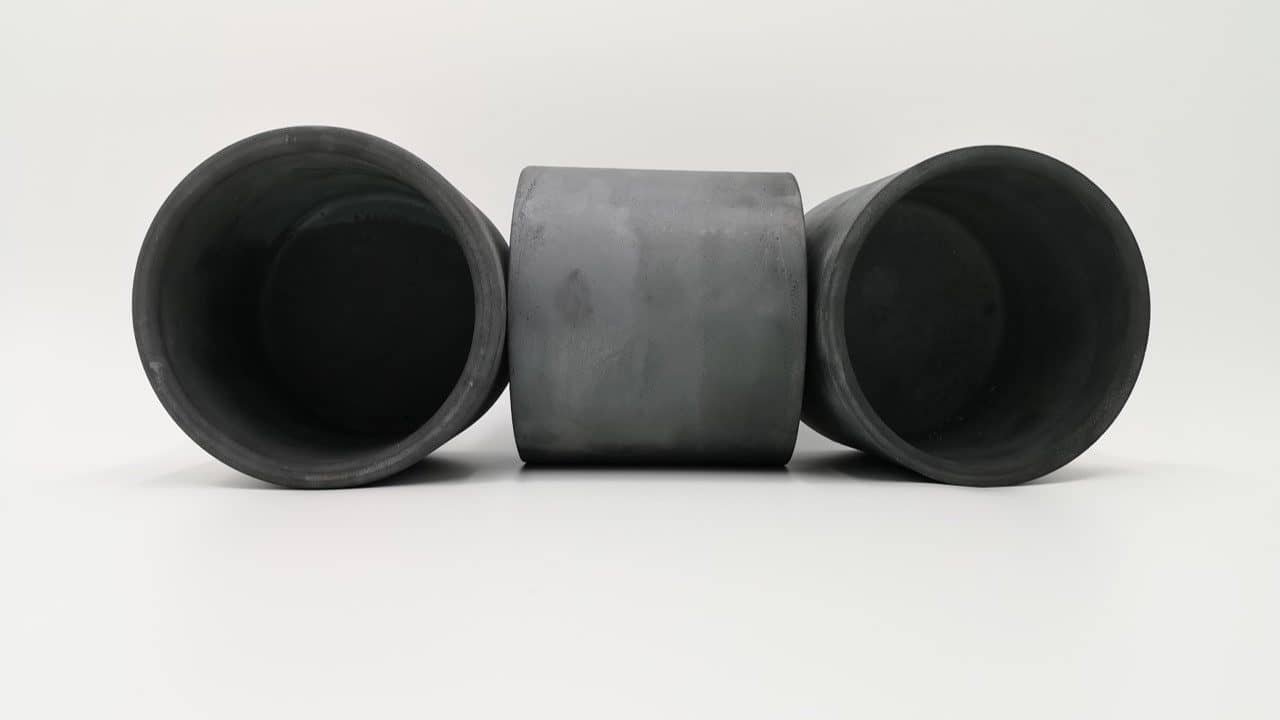 Silicon Carbide Crucible
Key Properties: Silicon carbide crucible is known for its excellent thermal efficiency and corrsion resistance. Its uperior thermal conductivity is much higher than alumina, transfering heat as quickly as metal, minimizing the temperature differences of the inside and outside. SiC ceramic crucible also possesses good corrosion resistance.
Applications: Silicon carbide crucibles are perfect for metal smelting, including non-ferrous metals, precious metals and alloys.
Advantages: Silicon carbide has a high melting point of 2,700℃, higher than temperature requirements of common metal smelting. The balanced performance of silicon carbide ceramic crucibles makes them widely used in metal smelting industries.
Limitations: SiC ceramic crucible is brittle, easy to fracture under intense impact. Besides, long-term exposures under the air will speed up the oxidation of the silicon carbide crucible, shortening its service life.
Zirconia Crucible
Zirconia ceramic crucibles are made from high-purity zirconium oxide, which is one of the most refractory ceramic materials in nature.
Key Properties: Zirconia crucibles are specifically designed for extreme temperature above 2000℃ with powerful high-temperature resistance.
Applications: Zirconia ceramic crucibles are critical in applications that requiring extreme refractory property, such as precious metal smelting and advanced ceramic material sintering.
Advantages: High fracture toughness make zirconia ceramic crucible resistant to impact, better than most of the ceramics.
Limitations: Zirconia has a higher density, making it quite heavy and hard to move. Low thermal conductivity make zirconia crucible not easy to heat quickly.
Boron Nitride Crucible
The 2 mainly used boron nitride are cubic boron nitride and pyrolytic boron nitride. Boron nitride ceramic crucibles are made from the latter, because P-BN has excellent heat resistance and thermal stability.

 Boron Nitride Crucible
Key Properties: Boron nitride crucibles have excellent high-temperature resistance up to 2,100℃ in vacuum environment. BN crucibles can also endure drastic temperature changes without cracking, suitable for process needing quickly heat or cool.
Applications: Boron nitride ceramic crucibles are used as conductive ceramic evaporation boat or coating crucible. On the other hand, BN crucible play an important role in melting and sintering semiconductor materials.
Advantages: Boron nitride features non-wetting property with most molten metals, making it ideal for processing materials that are likely to sticking or adhesion.
Limitations: Boron nitride crucible features low mechanical strength, not suitable for applications that requiring resistance to heavy pressure.
Case of Damage to Ceramic Crucibles
The cause of crucible breakage often requires specific analysis. Here is a case of crucibles made from high-purity silicon carbide used in the steel-making industry furnaces. Cracks occurred in the waist of the crucibles after using.
From investigation, we found this was not an isolated case. Breakage occurred in similar positions in SiC crucibles from different batches and regions. This led us pay attention to the furnace.

 Case of Crucible Breakage
Kiln Design Defects
The furnace chamber dimensions were designed to be too small. There were few and unevenly distributed support points for the crucible, resulting in uneven heating or cooling. Over repeated cycles, this can lead to fracture and breakage of silicon carbide ceramic crucibles.
Incomplete Preheating
During the preheating phase, a design flaw led to excessive negative pressure in the furnace. Cold air entered the furnace in large quantities from the bottom of the furnace, resulting in uneven preheating of the silicon carbide crucible. When rapid temperature increasing comes after preheating, the crucible could not withstand the thermal stress.
Furnace Atmosphere Deviates
High-purity silicon carbide crucibles possess the excellent chemical stability. However, if the furnace atmosphere deviates, they will oxide with oxygen and water vapor from the surface to the interior. In this case, an abnormal furnace atmosphere accelerated the oxidation, finally leading to cracking under the thermal stress.
How to Extend the Service Life of Ceramic Crucibles?
Proper maintenance can both extend the crucible’s life, as well as prevent safety accidents. For better performance and service life of crucibles, you’d better follow these suggestion:
Storage Conditions
Stored ceramic crucibles in a dry, well-ventilated place. Ceramic materials that have absorbed moisture are likely to degradation in high temperatures.
Preheating Stage
Preheat new crucibles or those that have not been used for a long time. It is generally recommended to hold the temperature at around 200℃ for a period to completely remove moisture. This can prevent the crucible from cracking due to the rapid vaporization at high temperatures.
In Use
When using the crucible, avoid throwing cold material forcefully into the bottom of a hot crucible. Prevent physical damage caused by mechanical impact or excessive local temperature differences.
After Use
Use specialized tools to clean out remaining residue. Do not use hard or sharp metal tools to scrape the inner walls of the crucible.
FAQs
- What is a ceramic crucible?
A ceramic crucible is a container made of highly refractory materials, mainly used for solid materials melting, liquid material reactions and metals refining.
- What is the melting point of a ceramic crucible?
The melting point of ceramic crucible depends on the materials of crucible. For example, the melting point of silicon carbide crucible is 2,700℃, and zirconia ceramic crucible can endure temperature above 2000℃.
- Which industries using ceramic crucibles?
Ceramic crucibles are mainly used in metallurgy, semiconductors, chemicals, new energy, aerospace, and scientific research.
- What are ceramic crucibles used for?
Ceramic crucibles are mainly used as heat-resistant containers for melting, sintering, or purifying metals, semiconductor materials, ceramic powders, and other substances at high temperatures.
- What is the difference between porcelain and ceramic crucible?
Porcelain crucibles are typically made from natural materials such as clay. They have relatively low performance, mostly used in laboratories or for low-temperature heating.
Ceramic crucibles are made from high-purity and high-performance advanced ceramic materials such as silicon carbide or alumina. They possess excellent performance, mainly used for industrial smelting and sintering.
- Which is better,graphite or ceramic crucible?
Graphite crucibles and ceramic crucibles each have advantages and disadvantages. They are suitable for different applications.
Graphite crucibles, especially made from high-purity graphite, generally have better thermal conductivity with poor oxidation resistance, requiring use under a protective atmosphere.
Ceramic crucibles offer advantages in oxidation resistance, wear resistance, and service life, resulting in a more balanced overall performance.
Conclusion
Ceramic crucibles are important parts in modern chemical and metallurgy industry. Each type of crucible has its unique application. Still confused about choosing the right ceramic crucible? Newthink New Materials manufactures ceramic crucibles made of silicon carbide, boron nitride, zirconia, and other advanced materials. If you have any requirements, please contact us to get the latest quotation. Thank you for reading this article, we hope it is helpful for you.


