
Kiln furniture determines the final result of your firing process. This is why many ceramic companies carefully choose materials when expanding their manufacturing. Today, nitride-bonded silicon carbide plates (NSiC plates) are becoming a reliable choice for ceramic industries.
This article shows you a practical NSiC plate application case, helping you understand why NSiC plates can replace traditional mullite, cordierite, and alumina kiln panels. After reading, you can determine whether they are suitable for your firing process.
Mullite Kiln Furniture: Why are They Gradually Withdrawing from Daily Ceramic Firing?
Mullite kiln furniture has served the daily ceramic industry for decades. It has a relatively open-pore structure. During glaze firing, volatile glaze components and fine ceramic dust sink into these pores. Trapped residue builds up on the shelf surface, leaving spots, pinholes, or glaze sticking on your tableware. You will see higher reject rates for glossy dinnerware and decorated mugs.
Mullite also struggles with fast temperature changes. Rapid thermal expansion and contraction create internal stress inside mullite boards.[1] In severe cases, shelves break mid-firing and ruin stacked ceramic loads. Moreover, mullite softens gradually under sustained heat. Once the board warps, your bowls and plates deform during firing.
All these problems add operational burden to your workshop. You need to order new mullite shelves often, and your team spends extra hours removing broken kiln furniture. Frequent shutdowns break your production schedule and raise total manufacturing costs.

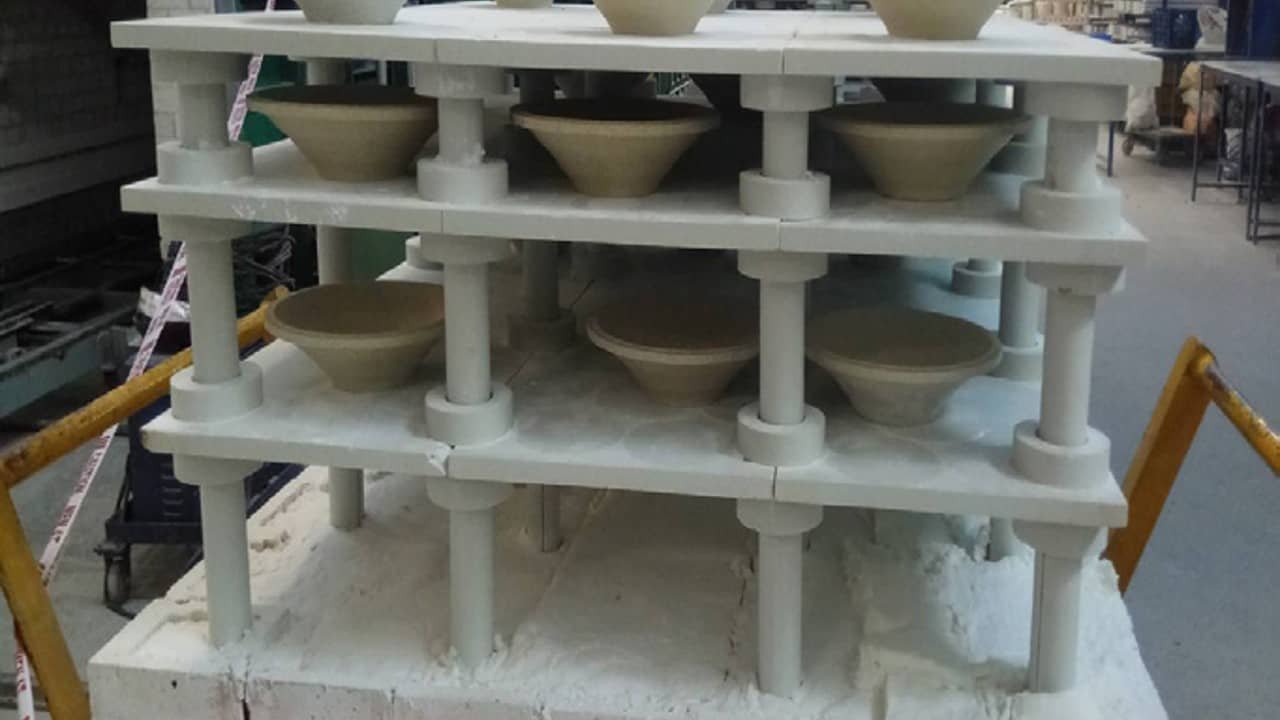 Mullite Kiln Furniture
NSiC Plate Application Case for A Daily Ceramic Factory
One of our clients, who is a daily ceramic producer, has made the change from mullite to NSiC plates after field trials.
Production Setup & Kiln Furniture Challenges
This factory produces large volumes of household daily ceramics, including plates, soup bowls, coffee mugs, and decorated kitchen tableware. It uses both tunnel kilns for mass continuous firing and shuttle kilns for special custom orders. The production line runs round-the-clock.
Before the upgrade, the factory fully used mullite kiln shelves for all glaze firing processes. They faced 3 headaches:
- Mullite shelf service life was short.Under 24-hour cyclic firing, most mullite plates cracked or warped within 2~3 months.
- Uneven shelf flatness caused product deformation.Warped mullite boards changed the support position of stacked ceramics. Around 8~10% of finished tableware had shape distortion or firing cracks.
- High porosity increased energy consumption and cleaning work.Mullite absorbed glaze vapors in the kiln. Residue needed heavy cleaning work between cycles.
The factory contacts our technical team for seeking a better fire-resistant material. Based on their conditions, we compared cordierite mullite, silicon carbide bonded materials, and finally selected nitride-bonded silicon carbide plates for full-line replacement.
NSiC Plate Implementation and Process Adjustments
The plant ordered custom-sized NSiC plates to match their existing kiln car dimensions. With our advice, they adjusted plate thickness according to stack load weight.
The team did not replace all shelves at once. They ran a pilot test on one kiln car first to track shelf performance.
During the trial, operators adjusted loading patterns. Our technical team also monitored temperature distribution across the NSiC shelf surface. We found NSiC plates carry heavier loads safely at high temperature. The factory slightly increased stacking density within safe limits.
After confirming stable performance, the factory rolled out NSiC plates across all tunnel kiln positions. They only kept a small set of mullite shelves for low-temperature test firing jobs.

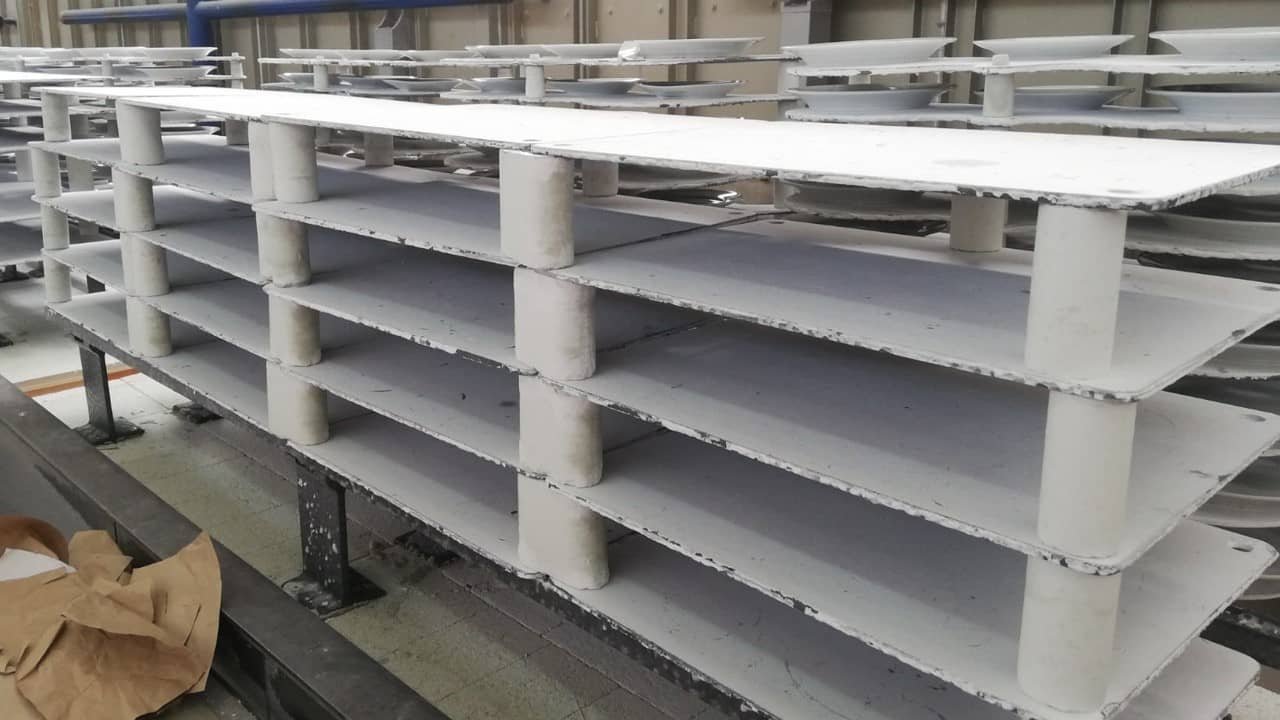 The Factory Chose to Use NSiC Boards
Advantages of NSiC Plates Seen in The Project
This daily ceramic project clearly finds the key strengths of NSiC plates.
Low porosity prevents glaze contamination. NSiC material has a dense, closed-pore structure. Glaze fumes and fine ceramic powder cannot penetrate deep into the plate body. The shelf surface and products stay clean through many firing cycles.
Excellent thermal shock resistance handles repeated heating and cooling. They do not crack easily under cyclic kiln operation, working equally well in steady tunnel kilns and variable shuttle kiln runs.
Great bending strength at high temperatures maintains shelf flatness. NSiC plates hold rigid shape under long working temperatures between 1,250℃ and 1,350℃.[2] Heavy stacked ceramic loads do not bend the plate.
Long service life cuts spare part budget. Compared with mullite shelves, NSiC plates survive many more firing cycles. You can reduce repeated purchasing and downtime for replacement.
Improvements After Switching to NSiC Plates
After 6 months of continuous operation, the factory collected clear production data. The reject rate of fired ceramic products dropped from nearly 10% to below 3%. Fewer deformed and stained pieces improved the pass rate for orders.
The frequency of kiln furniture replacement fell sharply. The workshop reduced time spent removing and installing broken shelves. Unplanned production stops decreased, and total available production hours rose.
Better thermal conductivity of NSiC plates also brought energy gains. The kiln reached target temperature more efficiently. The factory recorded about 12% lower gas consumption for each firing batch.
The factory also reduced cleaning labor. NSiC shelf surfaces shed glaze residue more easily. Operators spent less time grinding and cleaning shelves between runs.
Common Applications for NSiC Plates
NSiC plates are not limited only to daily ceramic tableware production. You can apply this kiln furniture in many high-temperature firing processes.
Continuous Tunnel Kiln Mass Production
Tunnel kilns run nonstop for large-volume output. Your shelves bear steady thermal load and heavy stacking weight.
NSiC plates maintain dimensional stability over hundreds of firing cycles. They are ideal for factories that prioritize stable long-run production.[1]
Shuttle Kiln Batch and Custom Firing
Shuttle kilns heat up and cool down for every batch. Frequent temperature changes break many traditional boards.
NSiC’s strong thermal shock resistance minimizes sudden shelf failure. It works well for small batches, custom ceramic items, and test firing.
High-Precision Glazed Ceramic and Sanitaryware Firing
Glazed ceramics and sanitaryware require strict surface quality. Contamination from kiln furniture creates costly rejects.
Low-porosity NSiC plates block glaze vapor absorption.[2] They help you keep clean ceramic surfaces and lower defect rates for premium ceramic goods.
Advanced Ceramic Component Sintering
Beyond traditional ceramics, NSiC plates support sintering of advanced ceramic parts. These products demand precise dimensional control during heating. Stable shelf flatness helps you keep tight tolerances for ceramic components.
FAQs
What temperature range can NSiC plates work continuously?
NSiC plates perform reliably from 1,200℃ up to 1,450℃, covering most glaze firing temperatures for daily ceramic products.
Can NSiC plates be used in oxidizing kiln atmospheres?
Yes. NSiC maintains stable performance in normal oxidizing firing environments. It is the standard choice for most ceramic glaze kilns.
What affects the actual service life of NSiC plates in your kiln?
Firing temperature peak, thermal cycle speed, stacking load weight, and kiln atmosphere.
Rapid temperature swings and overload will shorten service time.
Is surface coating required for NSiC plates before glaze firing?
Not always. You can add protective coating if you process highly fluid glazes that stick easily.
Can NSiC plates be cut or machined on site after delivery?
Limited on-site machining is possible. But most dimension adjustments are completed during manufacturing. On-site cutting may damage the material edge structure.
How to store unused NSiC plates in workshop?
Keep plates in dry storage areas. Avoid heavy impact and stacking boards too high.
What is the main difference between NSiC plates and reaction-bonded silicon carbide plates?
NSiC offers excellent thermal shock resistance. Reaction-bonded SiC has higher density but is less tolerant of fast temperature changes.
Conclusion
Switching to NSiC plates requires a higher upfront investment in kiln furniture. But their longer service life and better product yield bring down your total cost over time. If you struggle with similar problems, NSiC kiln plates deserve a place in your materials trial plan.
Newthink New Materials provides high-quality NSiC plates for your kilns. We support small pilot batches to test their performance under your kiln before full production rollout. Contact us for more information.

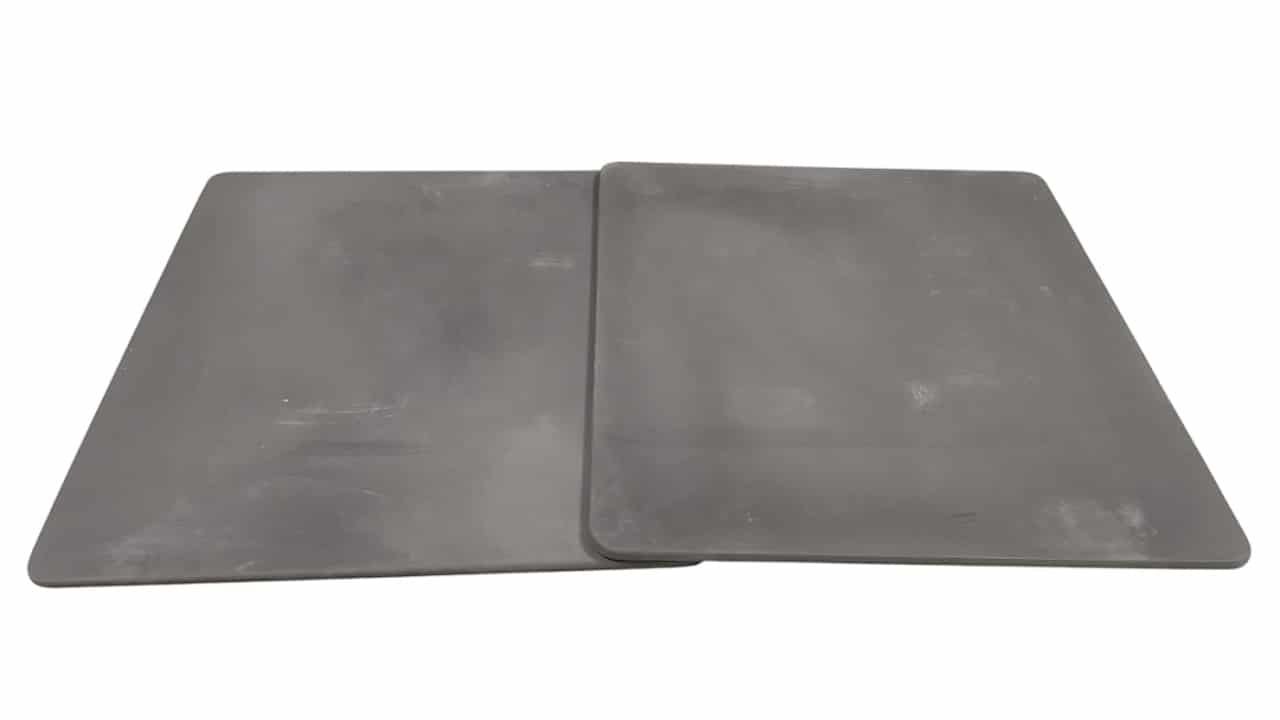 NSiC Plate
Thanks for your reading. Hope this article will be helpful.


 English
 Spanish
 Portuguese
 German
 Arabic

