
Ceramic crucibles are critical instruments in industries that operate at high temperatures. They can resist corrosion, thermal shock, and mechanical stress better than most metals, but ceramic crucibles with regular sizes might not fit well into your production process. This will affect your efficiency negatively.
Customized ceramic crucibles can solve these problems. In this article, we show you everything you need to know about customization, including all the necessary parameters, materials available, and the complete ordering process.
Further Reading: What is a Ceramic Crucible?
Why Custom Ceramic Crucibles Improve Your Operational Results?
Crucibles are designed for broad, general use. Custom builds target your specific challenges and deliver measurable operational benefits.
Higher Product Quality
Customized crucibles have precise wall thickness and geometry that are matched to your furnace. This ensures a uniform temperature distribution, reducing defects and improving the quality of your output.
Longer Service Life
Standard crucibles tend to be less durable due to their unsuitable material or design. Custom crucibles use the appropriate ceramic material depending on your specific circumstances. This makes them more durable and eliminates costs related to maintenance and repairs.
Suitable for Aggressive Environments
Some applications require the handling of aggressive materials. Crucibles can be specially made to resist an environment that would destroy regular crucibles.

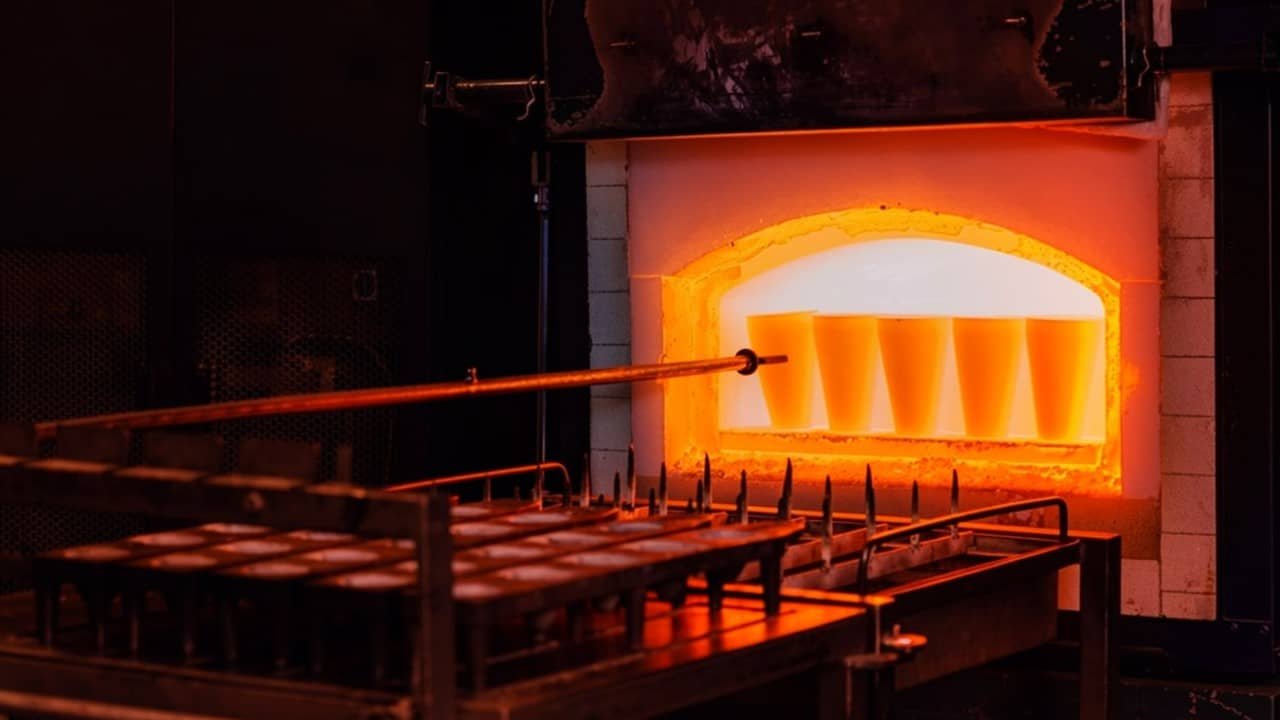 Ceramic Crucibles in Glowing Kiln in Foundry, Mining Industry
Fit for Your Equipment
Furnace cavities are of various dimensions. Custom crucibles are designed to fit your space perfectly without modifications. There is no wasted space in your furnace, and each heat cycle reaches its full potential.
Customization Parameters for Ceramic Crucibles
Every production process has unique demands. So which parameters can be customized to fulfill exact requirements? Below are the variables you can refer to.
Size
It is possible to state precisely how large an internal diameter, depth, and total capacity you need according to your required batch size. It will allow you to eliminate unused parts of the furnace and save heating time.
Design
Most standard crucibles are a cylinder or a cone. Custom-made shapes may include square, rectangular, boat or any other form you desire.
Thickness
A thicker wall provides more strength but less heat conduction. Custom designs balance thermal conductivity and mechanical durability for your process.
Material
The ceramic material is available in various purity levels and additive components. You can select exact purity and compositions to ensure optimal resistance to heat and corrosion for your application.
Surface Coatings
A smooth surface within the interior of the equipment makes it harder for materials to stick and easier to clean.
Special coatings such as glazed coatings and high-purity surface layers may be added for protection from corrosion or non-stick.
Functional Features
It is possible to integrate functional features to increase safety and efficiency while using the equipment, such as pouring lips, handles, lugs, and thermocouple ports. It is also possible to have heavy-duty bases made for high-load or frequent handling applications.
Step-by-Step Process to Order Custom Ceramic Crucibles
Customizing crucibles does not have to be a complicated, slow process. Following these steps will help you get accurate quotes and on-time delivery.
Step 1. Document Your Requirements
Start by noting your maximum operating temperature and typical heating rate.
List the materials you will process and any atmospheric conditions (e.g., air, inert, vacuum) and your furnace chamber dimensions and required batch volume.
Step 2. Select Appropriate Material
Match the crucible material to your temperature and chemical exposure needs.
We cover the most common industrial ceramic options in detail later in this guide. If you are unsure, our technical team can help you evaluate the best choice.
Step 3. Submit Design Specifications
You can provide formal engineering drawings, sketches, or even samples, which include all critical dimensions and any special features you require.
Step 4. Review & Test (If Needed)
For new or high-complexity designs, we recommend starting with a prototype. You can test the prototype in your actual process to verify performance. Make any necessary adjustments before moving to full production.
Step 5. Place Your Full Production Order
Once the design is finalized and approved, you can place your production order. Lead times will vary based on order size, complexity, and material availability.
Common Ceramic Materials for Custom Crucibles
Do you know? The material you choose defines the crucible’s performance limits. Let’s see some of the most widely used industrial ceramics for custom crucible applications.
Mullite & Cordierite Crucibles
Mullite and cordierite are lower-cost options for moderate-temperature use. They offer good thermal shock resistance at temperatures up to 1,300℃, commonly used for low-temperature firing, drying, and general lab work.[1]
Alumina (Al2O3) Crucibles
Alumina is the most widely used material for general high-temperature use. Purity levels range from 95% to 99.9% to match different application needs.
It offers good chemical resistance and works up to 1,750℃ in air.[3] In this way, it is ideal for metal melting, glass preparation, and thermal analysis testing.
Silicon Carbide (SiC) Crucibles
Silicon carbide offers excellent thermal conductivity and high mechanical strength. It resists thermal shock very well and works up to 1,650℃ in air, and this number can go up to 2,200℃ in inert atmospheres.[2]
It is commonly used for metal melting, sintering, and high-heat production processes.

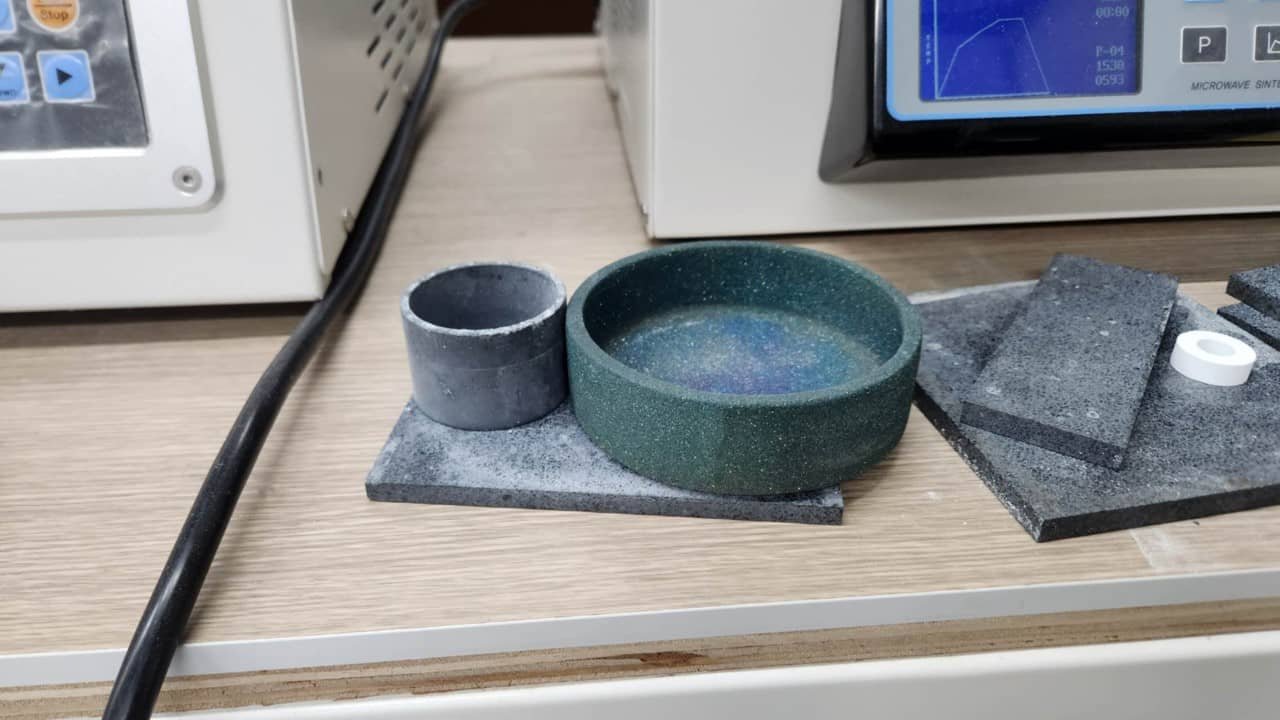 Silicon Carbide Crucibles for Sintering
Zirconia (ZrO2) Crucibles
Zirconia provides extremely high temperature resistance and mechanical toughness. It can withstand continuous use at temperatures up to 2,200℃, as well as offers excellent resistance to many molten metals and slags.
Zirconia crucibles are preferred for precious metal melting and ultra-high-temperature applications.
Boron Nitride (BN) Crucibles
Boron nitride has a special property: it has exceptional non-wetting properties with most molten metals. Along with good thermal shock resistance and working up to 1,000℃ in air and 2,000℃ in inert atmospheres, it is widely used in semiconductor processing and high-purity metal applications.
Quality Checks to Validate Your Custom Crucible Order
An important step is, before putting custom crucibles into production, you should verify their quality. Simple checks ensure your order meets your requirements.
Surface & Structural Defect Inspection
First, inspect surfaces for any visible defects. Even small flaws can grow rapidly under thermal cycling and cause failure.
Dimensional Accuracy Check
Verify if all critical dimensions match your drawings. Pay close attention to inner diameter, depth, and any custom feature placement to make sure safe installation and stable performance in your furnace.
Material & Density Verification
Confirm the ceramic material and purity level match your order specifications. Density testing can reveal porosity issues that would reduce service life.
Thermal Shock Performance Test
Heat the crucible to operating temperature then quench it according to your cycle. For critical applications, this test confirms the crucible can withstand your process conditions.
Further Reading: How to Use and Clean Ceramic Crucibles? A Complete Guide
FAQs
Can I modify a standard crucible instead of fully custom?
Yes, minor modifications are often possible. Full custom design is recommended for major dimensional or material changes.
How do I extend the lifespan of my custom crucible?
Follow proper heating and cooling rates recommended for your material to avoid sudden temperature changes. Regular cleaning prevents material buildup that can degrade the surface.
Can custom crucibles be used in vacuum or inert gas furnaces?
Yes. Some materials even have higher maximum temperatures in non-oxygen environments.
What if I don’t have formal engineering drawings?
You can provide sketches, photos of existing parts, or even written dimensions.
How long does a custom ceramic crucible order take?
Lead times depend on design complexity and order volume. Simple prototypes typically take 2~3 weeks to manufacture. Full production runs usually complete within 4~6 weeks.
What is the minimum order quantity for custom crucibles?
Vary by material and design. Generally, production orders often have lower per-unit costs at higher volumes.
Conclusion
Custom ceramic crucibles improve process consistency, extend service life, and fit your equipment perfectly. Whether you need a small lab prototype or a large production run, customization ensures you get the best possible performance and value.
Have specific questions about how to choose? Newthink New Materials provides high-quality ceramic crucibles with customization services. Consult with our ceramic engineer to get a tailored recommendation.
Thanks for your reading. Hope this article will be helpful.


 English
 Spanish
 Portuguese
 German
 Arabic

