
High-temperature manufacturing relies on durable, reliable kiln furniture to support products. You may have used traditional alumina or mullite plates for your production. However, they are more likely to crack under rapid temperature changes, pulling down your production efficiency and bringing more costs.
Recrystallized silicon carbide (RSiC) plates are becoming a high-performance alternative for demanding industrial thermal processes. In this article, we show a practical use case from one of our clients. This case from a technical ceramics facility can help you learn if RSiC plates are the right choice for your production line.
What Makes RSiC Plates Stand Out?
RSiC plates apart from conventional kiln furniture materials. They have superior characteristics that will lower disruptions and long-term costs for your operation.
High-Temperature Stability
RSiC plates retain their shape and strength even at continuous operating temperatures up to 1,650℃.[1] They do not soften under load at high temperatures like porous alumina plates. Even after thousands of production cycles, you can hardly see any deformation. This means your product quality will remain stable over time.
Thermal Shock Resistance
Rapid heating and cooling cycles put enormous stress on kiln shelves. Recrystallized silicon carbide has a low thermal expansion coefficient and high thermal conductivity to withstand sudden temperature changes without cracking or spalling.
Energy Efficiency
RSiC plates have a relatively low thermal mass compared to other heavy fire-resistant plates. This leads to faster heat-up and cool-down, shortening your production time. At the same time, less energy is wasted, so you can also reduce energy consumption.

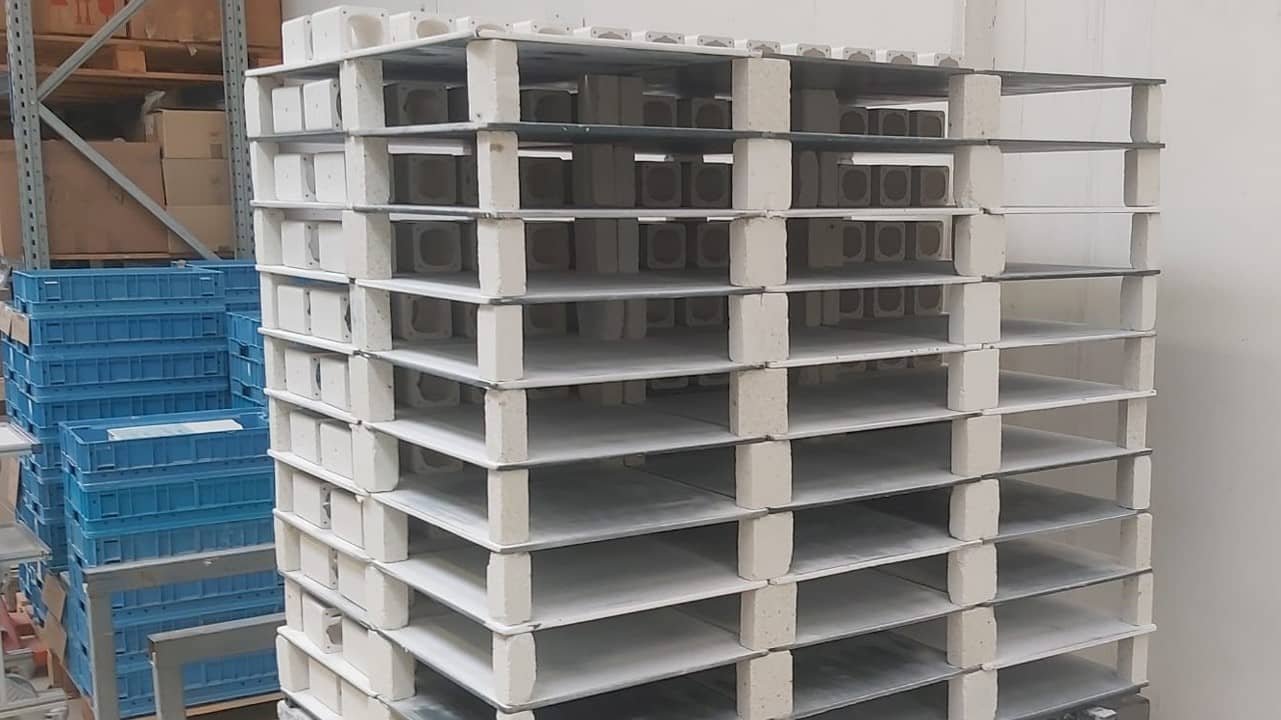 RSiC Plates for Industrial Kiln Uses
Case Analysis: Technical Ceramics Production Line
The best way to evaluate RSiC plate performance is to see it in action. A technical ceramics manufacturer replaced its traditional kiln shelves with Newthink RSiC plates and gained significantly from the upgrade.
The Challenge
This client specialized in advanced ceramic components for aerospace and industrial applications. Their production relied on batch sintering kilns running at 1,550℃, and originally used alumina-bonded silicon carbide plates as kiln shelves.[2]
These plates began to warp after just 3 months of regular use. Severe bending caused uneven heat distribution across the product load, leading to high rejection rates from warped finished parts.
Fractures necessitated partial plate replacements every 2 months, reducing their monthly output. This also brought rising costs for spare parts and labor.
The RSiC Plate Solution & Implementation
The client switched to our recrystallized silicon carbide plates, custom-cut to match their existing kiln shelf dimensions.
We worked with their engineering team to verify load capacity and thermal compatibility before full installation.
The plates were installed during a scheduled maintenance shutdown, without modifying the kiln structure.

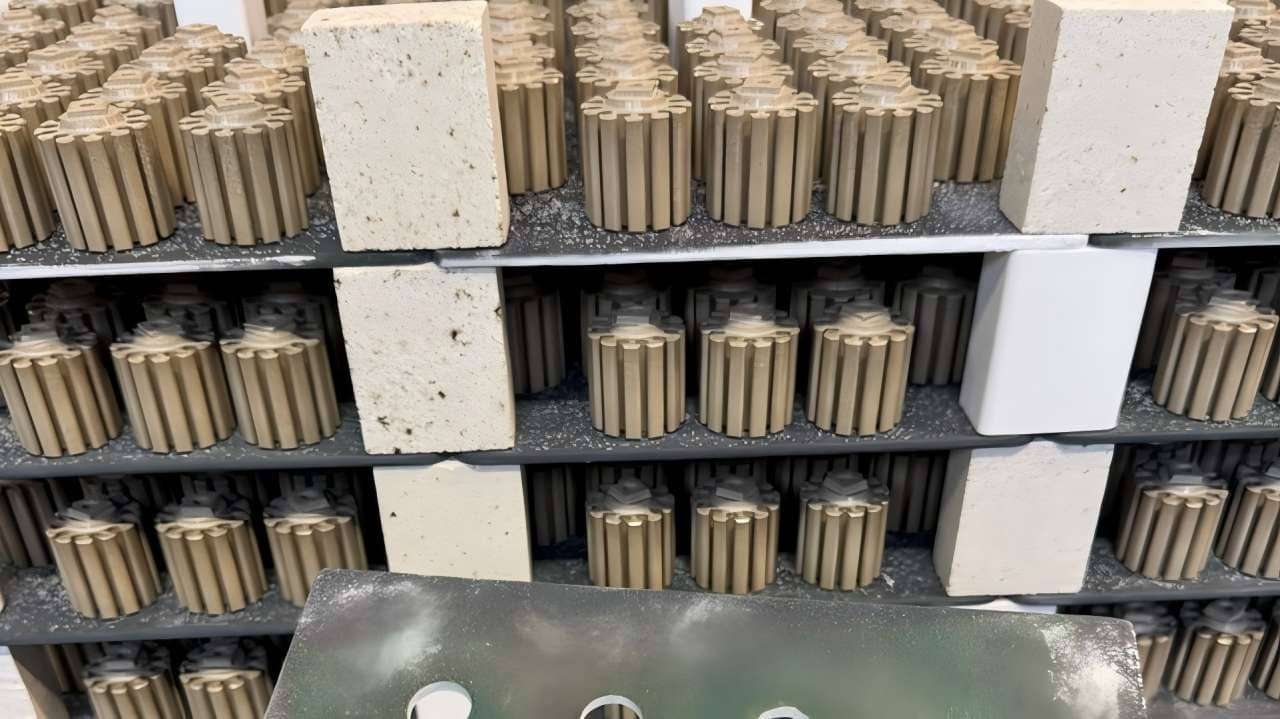 The Factory Replaced Kiln Furniture with our Supplied RSiC Plates
Results & Improvements
After 12 months of continuous operation, the client reported great improvements across many performance metrics.
- The RSiC plates showed no measurable deformation or bending, even after hundreds of thermal cycles. The flat, stable surface reduced product rejection rates from geometric defects by 22%.
- Cracking was eliminated. Plate replacement cycles extended from 6 months to over 24 months of expected service life, cutting annual kiln furniture replacement costs by an estimated 58%.
- Reduced maintenance downtime increased overall production efficiency by 18%. The client was able to add two extra production batches per month without expanding their kiln capacity.
Industrial Applications for RSiC Plates
Recrystallized silicon carbide plates deliver benefits across a wide range of high-temperature manufacturing settings. Their stability, purity, and durability make them a versatile solution for many processes.
Electronic Component Sintering
For electronic components, product purity is important. High-purity RSiC plates do not release contaminants into the kiln atmosphere. Their excellent flatness also ensures uniform heat transfer to delicate small parts, resulting in more stable electrical performance.
Powder Sintering
Metal powder sintering often involves high temperatures and reducing atmospheres.[2] RSiC plates maintain structure in these harsh conditions better than most fire-resistant materials. They can support heavy loads without sagging even at peak temperature.
Magnetic Material Calcination
Ferrite and rare earth magnetic material production requires precise thermal control. RSiC plates provide excellent thermal uniformity across the entire shelf surface, helping you achieve uniform magnetic properties in finished product.
How to Select the Right RSiC Plate for Your Operation?
Not all RSiC plates are manufactured to the same standard. If you want to purchase some, here are key factors to consider when sourcing for your production line.
Purity & Structure
High-purity raw material and controlled recrystallization produce a uniform, fine-grain structure. This delivers better strength and thermal shock resistance.
Avoid plates with visible porosity or inconsistent grain. They will fail earlier under thermal cycling.
Tolerance & Flatness
Plates with poor flatness will cause uneven loading and premature stress points. Look for plates with flatness tolerance within ±0.5 mm per meter for most industrial applications.
Custom Size & Thickness Options
Every kiln and production process has unique load and space requirements. Newhink offers custom cutting to match your exact shelf dimensions. We also recommend the optimal plate thickness based on your maximum load per shelf and operating temperature.
FAQs
How do I calculate how many RSiC plates I need for my kiln?
Start with your kiln’s internal shelf area and the size of each plate. Account for small gaps between plates to allow for thermal expansion. Newhink can help you calculate the exact quantity and layout for your specific kiln model.
What is the maximum operating temperature of recrystallized SiC plates?
RSiC plates can be used continuously at up to 1,650℃ in oxidizing atmospheres. For reducing or inert atmospheres, the maximum recommended temperature is around 1,600℃.
How do RSiC plates compare to reaction-bonded silicon carbide plates?
RSiC plates have higher purity and better high-temperature stability than RBSiC. They also offer superior thermal shock resistance. RBSiC plates are lower in cost.
Can RSiC plates be used in reducing or vacuum atmospheres?
Yes. But they are not recommended for strong alkali environments or long-term exposure to molten metals.
What is the typical lifespan of an RSiC plate in a batch kiln?
Lifespan varies based on cycle speed, maximum temperature, load weight, and handling practices. In standard batch sintering operations between 1,400~1,550℃, RSiC plates typically last 2–3 years.
Do RSiC plates release impurities?
No. They do not outgas or react with most ceramic or metal powders at standard sintering temperatures.
Can damaged RSiC plates be repaired?
Minor edge chips can be ground smooth without affecting performance. However, cracked or severely warped plates cannot be effectively repaired.
Conclusion
RSiC plates deliver proven performance gains for high-temperature manufacturing operations. If you are currently dealing with warped or cracked kiln shelves, these plates offer a long-term solution that pays.
Newthink New Materials is a professional ceramic manufacturer and supplier. We provide high-quality RSiC plates for your most demanding industry. Contact us to start with a small test batch.
Thanks for your reading. Hope this article will be helpful.


 English
 Spanish
 Portuguese
 German
 Arabic

