
Carbon is one of the most versatile elements on Earth. Its ability to form various bonds makes it the main component of many industrial materials. From hard diamond to soft graphite, carbon is very important in modern industry today.
This article will let you fully understand carbon’s atomic structure. Its atomic structure explains why advanced ceramics like silicon carbide and boron carbide perform the way they do to shape the ceramic components you rely on in modern industries.
Carbon Atom Basic Makeup
Each carbon atom has a nucleus composed of protons and neutrons.[5] There are 4 electrons in the outer shell of carbon atoms, which means that carbon can bond with other elements up to four times.[2]
It is this property that enables carbon’s versatility in industrial applications. Carbon can bond both with other carbon atoms and with silicon and boron atoms.
2 Key Bonding Patterns That Define Material Performance
Carbon atom structures its bonds in two main ways.
The first creates an inflexible pyramid made up of four equally strong attachment points. This strong bond provides great hardness and high thermal stability.[2] الماس و كربيد السيليكون ceramics are built on this frame.
The other structure is made up of flat hexagonal layers, with 3 bonds per atom. Gentle intermolecular forces keep these layers apart, hence making them easily to slip when a force is exerted. This layered design gives graphite its lubricity, and carbon fiber its tensile strength.
4 الكربون Main Structural Forms
Carbon exists in several structural forms. Each of them has completely different physical properties.
Diamond: Tetrahedral 3D Crystal Structure
The carbon atoms in diamond form bonds with 4 other carbon atoms. This results in a strong and continuous three-dimensional network of atoms that runs through the whole crystal.
This is what makes diamond extremely hard and conduct heat well; it also makes diamond very chemically unreactive.
Graphite: Layered Hexagonal Structure
Graphite is the most stable allotrope of carbon. Each carbon atom is bonded to 3 neighboring atoms, forming hexagonal rings. Such rings form a sheet of carbon atoms known as a graphene layer.[3]
The ability of these layers to slide across one another is why graphite has a lubricating effect. Graphite has good electrical conductivity in the plane of the sheets.
Graphene & Carbon Nanotubes
Graphene forms the foundation of graphite, but it displays different behavior if isolated. The conductivity, strength, and heat transfer characteristics of graphene are quite impressive.
If the sheets of graphene curl into tubes, then we get carbon nanotubes that display remarkable tensile strength and conductivity.
Amorphous Carbon
Amorphous carbon has no long-range ordered crystal structure. It consists of randomly arranged carbon atoms; common examples include carbon black, glassy carbon, and activated carbon.
In ceramic production, amorphous carbon acts as a sintering aid and a pore former. It also appears in carbon-bonded ceramic composites used in high-temperature metal processing.
Carbon Structure in Advanced Ceramic Materials
Carbon shines in industrial ceramics when combined with other elements.
كربيد السيليكون (SiC)
Silicon carbide is one of the most widely used advanced technical ceramics. Its crystal structure is built on a tetrahedral framework similar to diamond, in which carbon atoms bond to 4 silicon atoms, and each silicon atom bonds to 4 carbon atoms, creating an extremely strong covalent structure.[1]
Silicon carbide exists in hundreds of polytypes. α-SiC و β-SiC are the most common. The former is stable at high temperatures, while the latter at lower temperatures.
للمزيد من القراءة: What is Silicon Carbide Ceramic Materials? – Properties, Uses, and Applications Explained

 Silicon Carbide β-phase (Left) and α-phase (Right)
Its structure is what delivers the hardness and thermal stability needed for harsh operating conditions. You will find silicon carbide in mechanical seals, kiln furniture, heat exchangers, and semiconductor processing components.
كربيد البورون (B4ج)
Boron carbide is one of the hardest ceramic materials available. Its complex rhombohedral crystal structure features 12-atom boron icosahedra connected by carbon atoms and three-atom carbon chains.
The strong covalent bonds between boron and carbon give the material its exceptional hardness, low density, and high-temperature stability.[4] You commonly see boron carbide in armor systems, blasting nozzles, and grinding media.
Carbon Fiber Reinforced Ceramic Composites
In ceramic matrix composites, carbon fibers add toughness to otherwise brittle ceramic bases. Each carbon fiber consists of tightly packed graphite-like carbon layers aligned along the fiber axis, giving the fiber extremely high tensile strength along its length.
When embedded in a silicon carbide or alumina matrix, carbon fibers absorb fracture energy and stop crack propagation. This design is valuable in brake systems, heat shields, and aerospace components.
How Carbon Bonding Shapes Ceramic Performance Properties?
The bonding of carbon atoms determines the excellent properties of carbon-based ceramics. Let’s see 3 most incredible characteristics of them:
الصلابة ومقاومة التآكل
Carbon atoms form tight, fixed connections with surrounding atoms in the ceramic lattice. This rigid structure strongly resists surface abrasion, scratching and material loss.
For mechanical seals, slurry liners and wear parts, this means much slower wear rates. Components will last far longer, reducing your spare part costs and downtime. You can get reliable operation even with constant exposure to abrasive particles and sliding friction.
استقرار درجات الحرارة العالية
The ordered carbon-based structure transfers heat quickly and uniformly across the material. This means frictional or process heat dissipates fast, so no dangerous hot spots build up inside the part.
For kiln furniture and high-heat process components, this delivers consistent long-term use. For example, silicon carbide keeps its full strength well above 1,400℃ in inert environments. They stay stable cycle after cycle without warping or softening issues.
مقاومة التآكل
Corrosive fluids, acids and alkalis cannot easily break down the ceramic’s internal structure. If you handle aggressive process media or molten metals, this stability is a major advantage.
Carbon-based ceramics do not rust, corrode or degrade as fast as standard metal alternatives. This lowers the risk of process leaks, reduces maintenance, and extends equipment service life.
Industrial Applications of Carbon-Based Ceramics
With the above basics, do you know where these materials deliver real value in daily operations? Let’s see some common applications where carbon-based ceramics shine!
High-Temperature Furnace & Kiln Components
Graphite and silicon carbide both play major roles in high-temperature industrial furnaces.
Graphite fixtures and heating elements work reliably in vacuum and inert-atmosphere furnaces at temperatures above 2,000℃.
أثاث أفران من كربيد السيليكون supports ceramic parts during firing. It maintains dimensional stability through repeated heating cycles. If you run a sintering or heat treatment line, you can depend on these materials for consistent results.

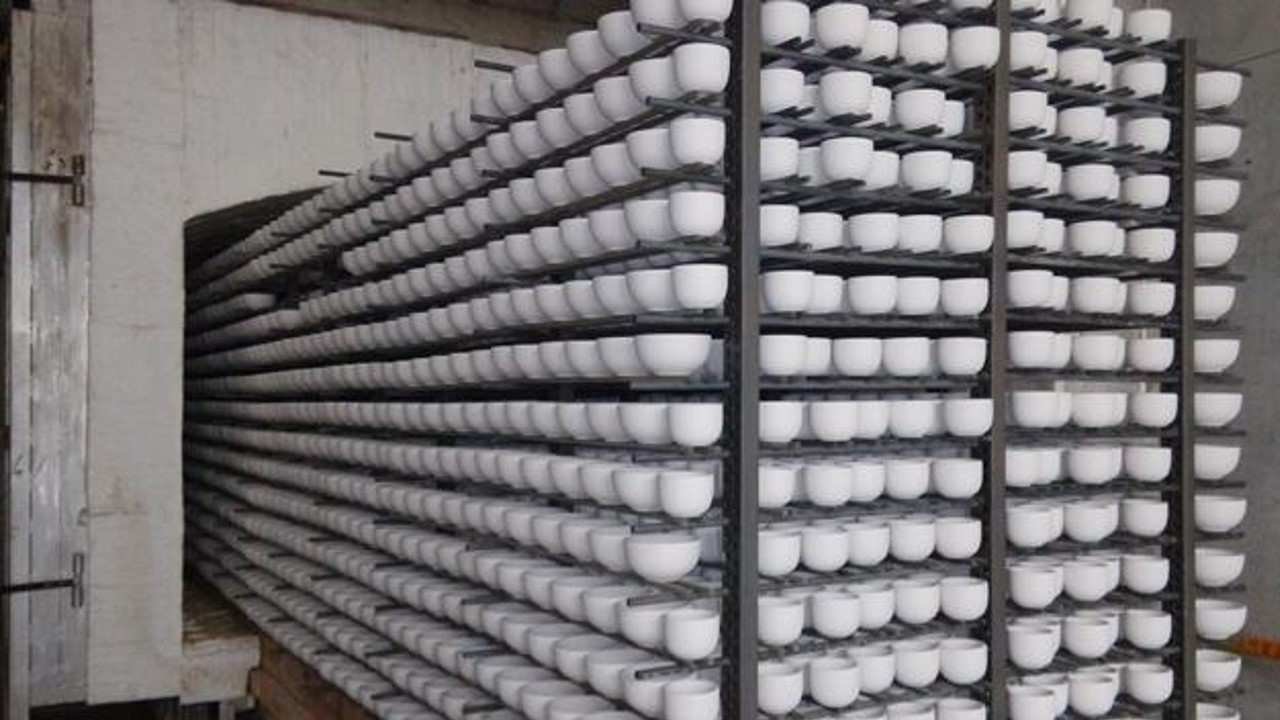 Silicon Carbide Kiln Furniture for Ceramic Kiln Uses
معالجة أشباه الموصلات
The semiconductor industry demands ultra-pure, thermally stable materials. Silicon carbide and graphite components meet this need perfectly.
You will find silicon carbide used in susceptors, wafer carriers, and process tubes inside CVD and epitaxy reactors. Their structure delivers uniform heat distribution and 0 contamination operation. For your precision manufacturing steps, it directly improves yield and reduces defects.
Mechanical Seals & Pump Components
Silicon carbide’s hardness provides outstanding wear resistance, while its thermal conductivity dissipates frictional heat quickly.
Compared to carbon-graphite or metal ones, موانع تسرب من كربيد السيليكون handle high pressures, abrasive slurries, and corrosive fluids better. You can benefit from them in water pumps, chemical processing equipment, and oil and gas systems.
Abrasive Media & Surface Finishing Tools
Boron carbide and silicon carbide are both widely used as abrasive grains. Their high hardness makes them effective for grinding, lapping, and blasting operations.
Silicon carbide grinding wheels cut fast and work well on stone, glass, and softer metals. Sandblasting nozzles made by SiC or B4C also last many times longer than steel or alumina ones. With these abrasives, you will surely get longer tool life.[4]

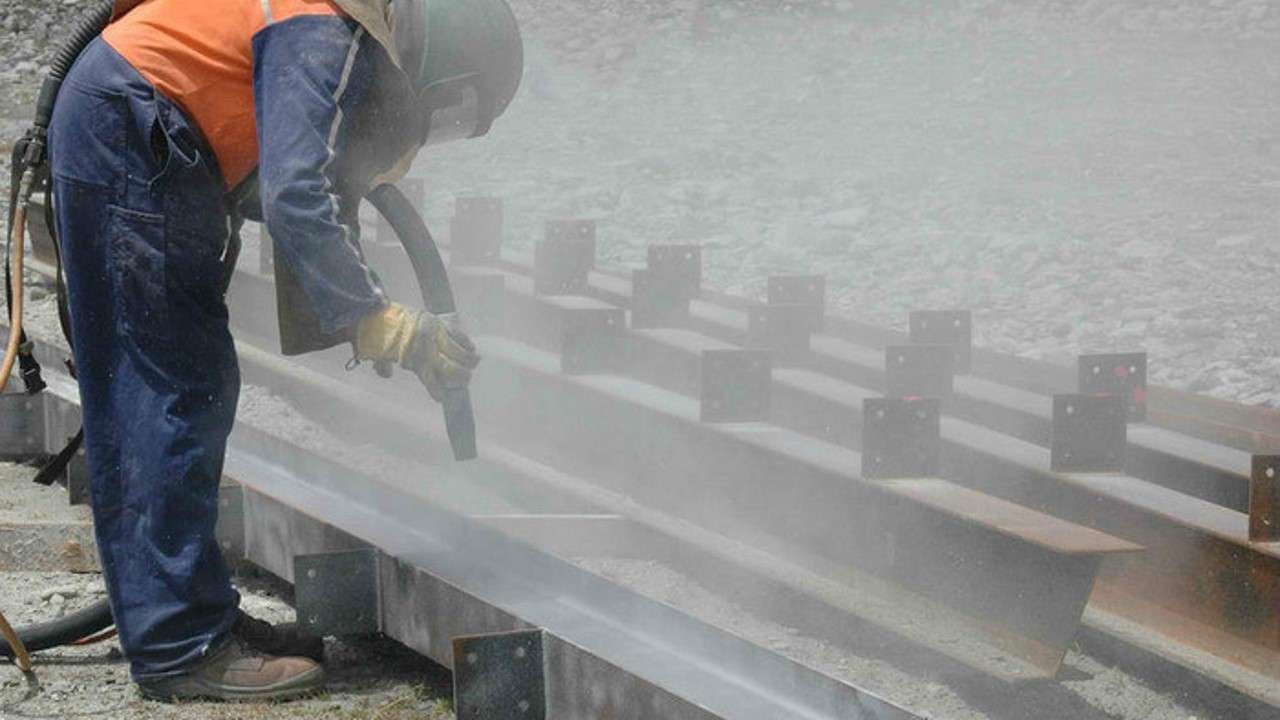 Silicon Carbide Sandblasting Nozzles Applications
الأسئلة الشائعة
Is carbon a ceramic material?
Pure carbon in graphite or diamond form is often classified as a ceramic-like material. Most industrial carbon ceramics are compounds such as silicon carbide or boron carbide.
How does carbon structure affect ceramic sintering behavior?
Carbon can act as a sintering aid or a reaction phase during ceramic firing. In silicon carbide production, for example, carbon reacts with silicon to form new SiC bonds and densify the part.
Can carbon-based ceramics replace metal parts in all applications?
Not all. While carbon-based ceramics excel at high heat and wear, they are brittle and cannot absorb heavy impact the way ductile metals can.
Do carbon ceramics conduct electricity?
Depend on the structure.
- Graphite and carbon fiberconduct electricity well.
- كربيد السيليكونis a semiconductor.
- كربيد البورونbehaves as a semiconductor at higher temperatures.
How do you choose between graphite and SiC for furnace use?
Graphite works best in vacuum or inert gas at very high temperatures but oxidizes easily in air. Silicon carbide performs well in air at moderate high temperatures and offers better mechanical rigidity.
خاتمة
Carbon’s atomic structure is the hidden engine behind many of today’s high-performing technical ceramics. Whether you are finding wear-resistant seals or stable furnace hardware, learning about the carbon atom helps you make quicker, smarter choices.
If you are evaluating ceramic materials for your next project, you can contact نيو ثينك مواد جديدة. With experience in سيراميك كربيد السيليكون since 2011, we will help you analyze which carbon’s bonding patterns match your performance requirements.
شكراً لقراءتكم. نأمل أن يكون هذا المقال مفيداً.
مرجع
[2] Ali, M. (2018). Atomic Structure and Binding of Carbon Atoms.
[3] Chung, D. D. L. (2002). Review graphite. مجلة علوم المواد, 37(8), 1475-1489.


 Arabic
 English
 Spanish
 Portuguese
 German

