
Stainless steel was always the first choice of material for radiant tubes for decades. These tubes are widely used in industrial heat-treatment lines. However, at the high temperatures required for most heat treatment processes, it cannot meet long-term performance expectations.
Advanced engineering ceramics such as silicon carbide now offer high-performance solutions. This article details exactly how silicon carbide radiant tubes outperform stainless steel in demanding environments. We also share a real-world case study from a heat treatment facility that made the full switch.
Further Reading: Silicon Carbide vs Metal Radiant Tube: Performance Comparison & Selection Guide
Limitations of Stainless Steel Radiant Tubes
Stainless steel radiant tubes are low-priced and easy to fabricate. As a result, they have been widely used for many years. However, when exposed to high-heat treatment, stainless steel has some obvious drawbacks.
Short Operation Under Constantly High Temperatures
The strength of the steel becomes reduced beyond 900℃. Oxidation and scaling will intensify with continued usage, resulting in thinner walls of the tube.
For the operations that run the entire day, the stainless steel tubes will be used for only 3 to 6 months. This may lead to frequent stops, cost of replacements and inefficiency of the production process.
Distortion & Warping
Above 950℃, stainless steel is subjected to thermal creep. During operation, tubes tend to bend and distort, creating nonuniform temperature areas inside the furnace. This leads to an increased rate of part rejection.
High Energy Consumption
The thermal conductivity of stainless steel is lower than that of ceramic materials. Consequently, more energy is spent on maintaining high furnace temperature. Longer warm-up cycles increase process time and decrease overall throughput of the assembly line, with higher utility bills for less consistent heating performance.
Advantages of Silicon Carbide Radiant Tubes Over Stainless Steel
Silicon carbide is an advanced engineering ceramic that can address every major flaw of stainless steel in high-temperature heating applications.
Exceptional High-Temperature Strength
Silicon carbide maintains its strength at continuous temperatures up to 1,300℃. It nearly does not undergo thermal creep even under long-lasting operations, remaining stable year after year with no sagging or warping.
Superior Thermal Conductivity
Silicon carbide conducts heat 2~3 times more efficiently than stainless steel. Heat transfers evenly across the entire tube surface with no cold spots, so that furnaces can reach target temperatures faster and maintain more consistent heat distribution to reduce scrap rates.
Excellent Corrosion Resistance
SiC will produce an oxide film in high-temperature oxygen that is thin and self-recovering. The film protects the material against oxidation, scaling, and most corrosive atmospheres without any deterioration. This results in a stable surface throughout the use of silicon carbide furnace tubes.
Enhanced Durability
Silicon carbide tubes can be customized with precise wall thicknesses. Modest increasing wall thickness boost impact resistance and also improve heat retention inside for efficient energy use. So you get a longer-used tube without sacrificing thermal transfer performance.

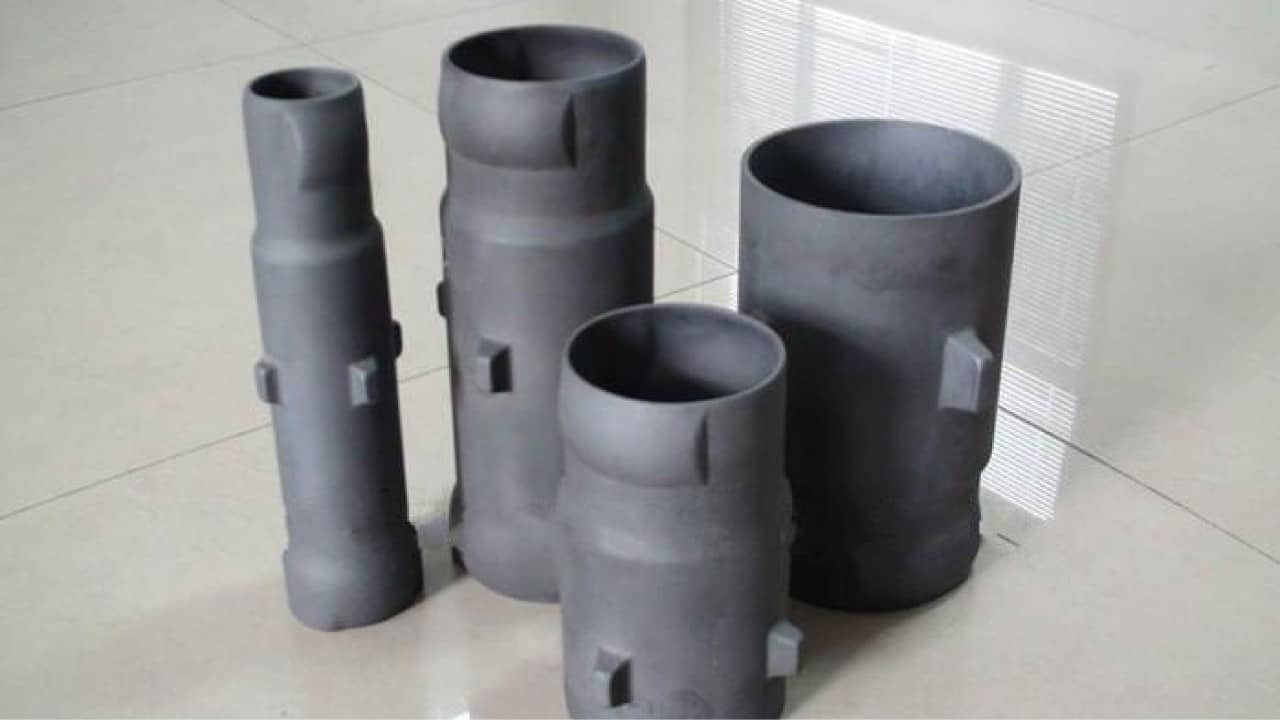 Silicon Carbide Radiant Tubes
Case Study: Heat Treatment Facility
After the above learning, to better understand how these material benefits translate to actual operational results, let’s look at a recent upgrade project at a commercial heat treatment plant.
Setup & Pain Points
The plant operated a continuous gas-fired furnace for carbon steel normalizing and tempering processes. It used 6mm wall stainless steel radiant tubes, running 24 hours a day at 950~1,050℃
They struggled with 3 persistent, costly issues:
- Tubes failed after only 3~4 months of continuous operation.
- Severe warping and deformation appeared after just 2 months.
- 8~10% part rejection rate for critical components.
Maintenance teams spent 12~16 hours per month to replace damaged tubes. The plant lost an estimated 40 production hours every year to unplanned downtime.
Our Recommended Solution
We conducted a full furnace review and proposed a complete switch to reaction-bonded silicon carbide radiant tubes.
At the same time, we adjusted the tubes’ design, increasing the tube wall thickness from 6mm to 7mm, making it can handle repeated thermal cycling stress. It also improved heat retention inside the tube core, boosting overall thermal transfer efficiency.
We also manufactured all tubes to match existing mounting dimensions for a direct drop-in replacement.
Measurable Performance Results After Upgrade
The plant completed the replacement during a scheduled 2-day maintenance shutdown.
After 18 months of continuous operation, the results exceeded initial expectations:
- Tubes remain fully functional with no signs of degradation. Expected service life is 24+ months. Service life extended by 6x.
- Tubes maintain perfect dimensional stability. No misalignment or uneven heating from sagging.
- Faster heat-up cycles and reduced heat loss cut natural gas consumption by 15%. The whole heating efficiency improved by 18%.
- Uniform temperature distribution eliminated quality issues from uneven heating.
Annual maintenance and downtime costs fell by 65%. The full upgrade paid for itself in 14 months.
Switching to SiC Radiant Tubes, Which Factors Need to be Considered?
While the performance benefits are clear, a successful transition from stainless steel to SiC requires careful planning to match your furnace requirements.
Matching Specifications to Your Furnace
SiC tubes come in various material grades and end configurations. You need to match tube diameter, length, and connection points to your existing furnace setup.
Wall Thickness for Your Operating Conditions
Applications with heavy thermal shock or higher peak temperatures benefit from slightly thicker walls. For most general heat treatment processes, 6~8mm wall thickness delivers the best performance balance.
Installation & Handling
Silicon carbide is a hard, brittle ceramic material. Proper handling during installation prevents chipping, cracking, or structural damage. Use appropriate lifting tools and follow recommended torque specifications for mounting hardware.
Total Cost of Ownership Calculation
SiC tubes have a higher upfront purchase cost than stainless steel equivalents. You should calculate total cost over a 2~3 year period for accurate comparison. Factor in replacement frequency, labor costs, production downtime, and energy savings.
FAQs
What is the maximum continuous operating temperature for silicon carbide radiant tubes?
Reaction-bonded SiC tubes operate safely at continuous temperatures up to 1,300℃. Recrystallized SiC grades can handle up to 1,450℃ for specialized high-temperature processes.
Can silicon carbide radiant tubes directly replace stainless steel tubes without modifications?
In most cases, yes. Minor gas flow adjustments may be needed to optimize heating efficiency.
Do SiC radiant tubes work with both gas-fired and electric heating systems?
Yes. They are most commonly used in gas-fired furnaces as flame radiant tubes. They also work as protective sheaths for electric heating elements in high-temperature electric furnaces.
How does the upfront cost of SiC radiant tubes compare to stainless steel?
SiC tubes typically cost 2~3 times more upfront than stainless steel equivalents. However, their 5~7x longer service life and energy savings deliver a much lower total cost of ownership.
Are silicon carbide tubes resistant to carburizing and nitriding furnace atmospheres?
Yes. Silicon carbide is chemically inert to most common heat treatment atmospheres without material degradation.
What is the typical lead time for custom-sized silicon carbide radiant tubes?
Newthink provides standard-size tubes that usually ship within 2~3 weeks. Custom dimensions or special end connection configurations take 4~6 weeks from order confirmation.
Can damaged silicon carbide radiant tubes be repaired?
Major structural damage or through-cracks require full tube replacement. We recommend replacing the damaged tube as quickly as possible.
Conclusion
Stainless steel radiant tubes have clear limitations in demanding high-temperature heat treatment environments. Silicon carbide radiant tubes solve every one of these issues with superior material properties. If you are also dealing with uneven heating, switching to silicon carbide is a proven investment.
Newthink New Materials provides high-quality SiC radiant tubes. We support customization and provide samples; you can start with a small trial to validate performance before committing to a full upgrade.

 Silicon Carbide Radiant Tubes with Strong Packaging
Thanks for your reading. Hope this article will be helpful.


 English
 Spanish
 Portuguese
 German
 Arabic

