
During high-temperature heat treatment in many industrial manufacturing processes, the furnace tube protects the workpieces and controls the atmosphere. It directly affects final product quality.
Making a choice between silicon carbide and high-purity graphite tubes is truly a challenge. If choosing wrong, it will lead to part contamination and unexpected downtime. This article will compare their performance, applications and costs to help you pick the right one.
Further Reading: Silicon Carbide Furnace Tube vs High-Purity Quartz Furnace Tube
Furnace Tubes’ Material Review: SiC & Graphite
Before comparing on-the-job performance, let’s cover the basic traits of each material.
Silicon Carbide (SiC) Furnace Tubes
Silicon carbide is a high-performance advanced ceramic material. It is made from refined SiC powder. Most industrial furnace tubes use reaction-bonded or recrystallized SiC manufacturing processes.
SiC ceramic furnace tubes combine high hardness, thermal stability, and oxidation resistance. They work well for processes that require low contamination and consistent heat distribution.
Common uses include ceramic sintering, powder metallurgy, and precision metal heat treatment.

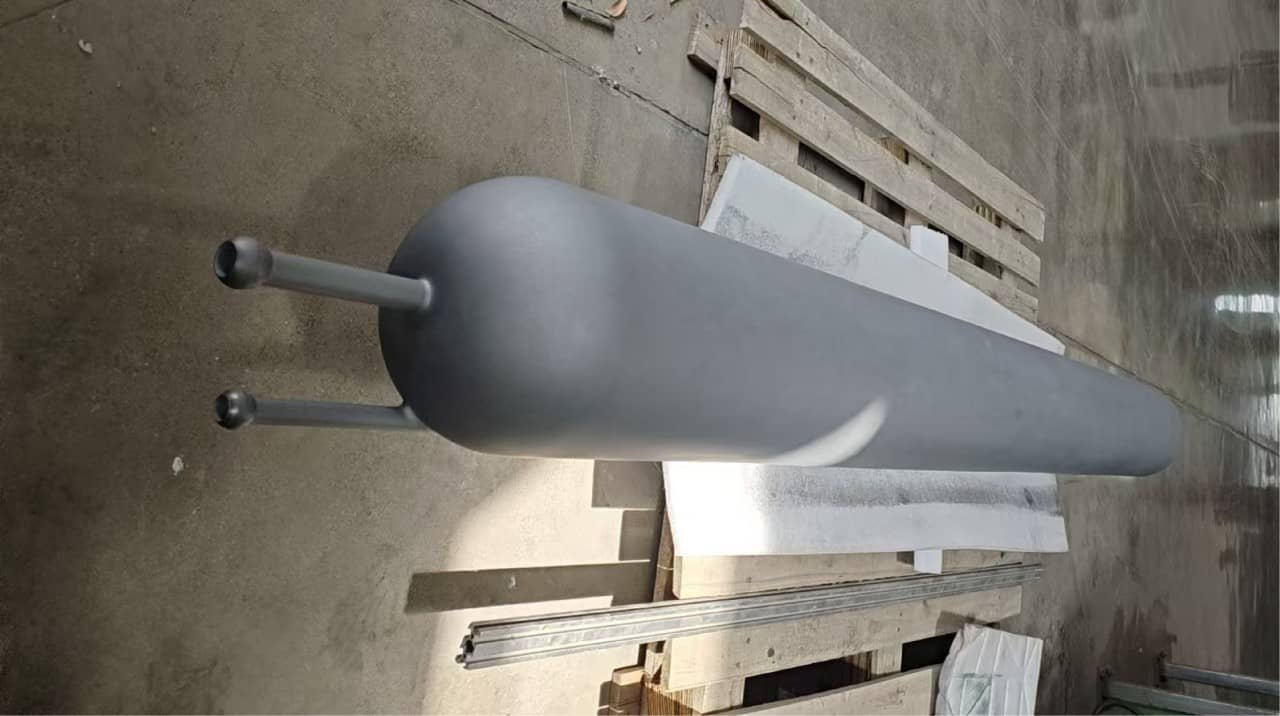 Large-Size Silicon Carbide Furnace Tube
Graphite Furnace Tubes
High-purity graphite tubes are made from dense, high-grade graphite billets. Top-grade options have a carbon content of 99.9% or higher for reduced contamination.
Graphite performs well in extremely high-temperature environments with inert or vacuum atmospheres. However, when exposed to oxygen at high temperatures, graphite suffers from rapid oxidation.
It is a widely used option for vacuum annealing, graphitization, and carbon material processing.
Detailed Performance Comparison: SiC vs Graphite Furnace Tube
Material properties will directly influence tubes’ practical performance on your production line. The part below compares their key metrics.
High-Temperature Properties
Silicon carbide tubes support continuous use at up to 1,650℃ in normal air atmosphere. They can withstand short peak temperatures even up to 1,700℃ without damage to the structure.
With a very low thermal expansion coefficient, SiC also possesses excellent thermal shock resistance. Opening and closing your furnace frequently does not risk cracks or fractures.
High-purity graphite tubes reach 2,800℃ in vacuum or fully inert gas environments.[1] This makes it ideal for specialized high-heat processes.
However, graphite starts to oxidize noticeably at temperatures above 500℃ in air. Oxidation speeds up quickly above 600℃, making long-term air use impractical.
Oxidation & Chemical Resistance
SiC forms a thin, protective silica layer on its surface when exposed to high-temperature oxygen. This layer stops further oxidation, giving SiC far better durability in oxidizing atmospheres.
Moreover, it also resists most acids, alkalis, and molten metals, except hydrofluoric acid and strong bases. You can run air, oxygen, and most neutral atmospheres with minimal tube degradation.
Graphite reacts with oxygen at high temperatures to form carbon monoxide and carbon dioxide. Over time, oxidation thins the tube wall, reduces strength, and creates loose carbon particles.
Although graphite resists many molten metals and reducing atmospheres like hydrogen and nitrogen, it still cannot be used for long in any environment with even small amounts of free oxygen.
Thermal Conductivity
Silicon carbide possesses very high thermal conductivity compared to most oxide ceramic materials. Heat spreads quickly and evenly across the tube wall for consistent temperature distribution. This uniformity reduces part-to-part variation and improves overall product quality.
Graphite also has excellent thermal conductivity and is even slightly higher than some SiC grades. However, surface oxidation creates porous layers on the graphite tube that reduce conductivity over time. You may notice uneven heating and temperature drift as a graphite tube ages.
Stable inert atmospheres help graphite maintain consistent thermal performance longer.
Mechanical Strength
SiC maintains high flexural strength and hardness at room and elevated temperatures. Its rigid structure supports heavy workpieces and charge boats without bending or sagging. It also has excellent wear resistance, so it resists scratches and particle generation from friction. SiC tubes are better for heavy batch processing than graphite alternatives.
Graphite is a relatively soft material with lower structural strength than SiC. It can chip or generate fine carbon particles during loading and unloading operations. The most important is, at very high temperatures, graphite loses a small portion of its structural strength. You should avoid heavy or uneven loads when using graphite furnace tubes.
Contamination Control
High-purity SiC tubes release almost no particulate or elemental contamination during use. They do not introduce carbon, metal, or ceramic particles into your process atmosphere.[2] This makes them ideal for semiconductor processing and high-purity ceramic production without unwanted material transfer.
Graphite tubes can release fine carbon particles and trace carbon vapor at high temperatures. This can cause carburization of metal parts and contamination of sensitive materials. You should avoid graphite if you work with carbon-sensitive alloys or semiconductor wafers.
Cost & Lifecycle Value
Silicon carbide furnace tubes have higher upfront costs due to complex manufacturing. A standard SiC tube typically costs 2–3 times more than a comparable graphite tube. Graphite tubes have low initial costs thanks to simpler machining and lower raw material pricing.
However, a well-maintained SiC tube can last 1–3 years in normal air-atmosphere operation.[1] It degrades very slowly, so you can plan replacements around scheduled maintenance windows. Graphite tubes last 6–12 months in stable vacuum or inert gas environments. In an air atmosphere, this number greatly drops.

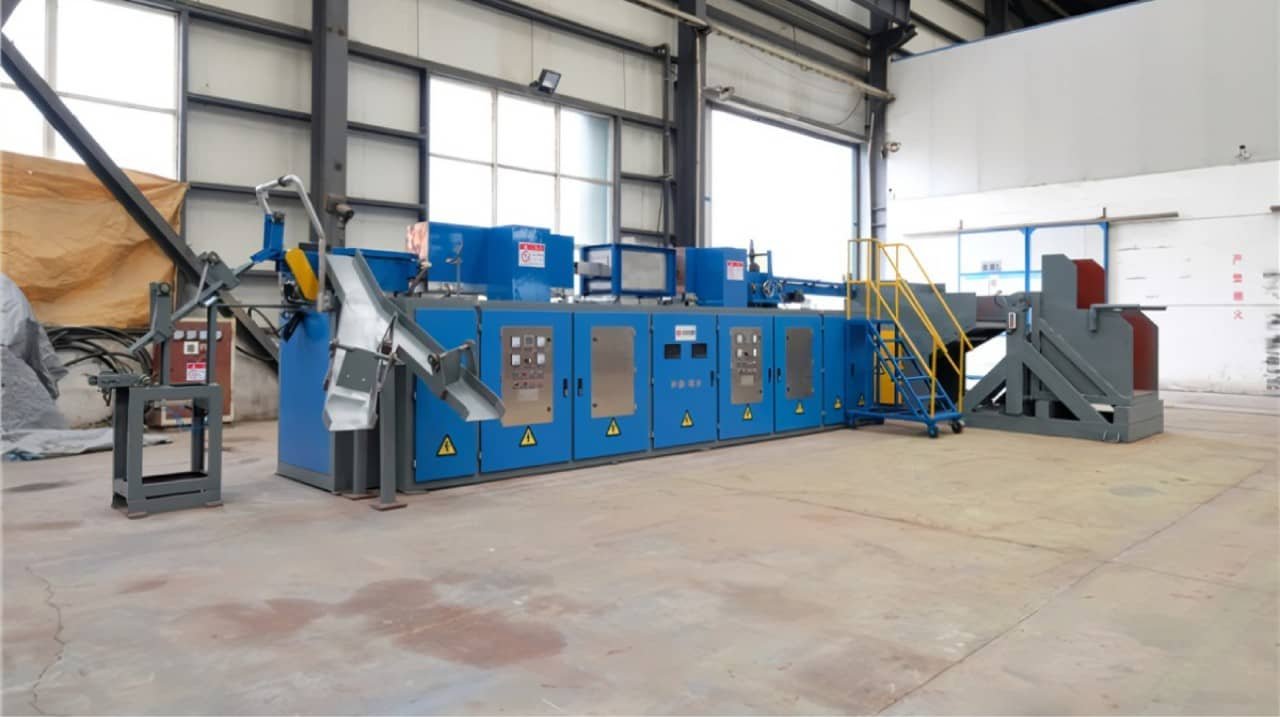 Furnace Tube Industrial Application
Furnace Tube Ideal Application: How to Choose Between SiC and Graphite?
Even if silicon carbide furnace tubes have superior performance, they should not be chosen blindly. Matching the tube to your operating conditions will maximize performance and value.
When to Choose Silicon Carbide Furnace Tubes?
SiC tubes are the top choice for air or oxygen-atmosphere sintering and heat treatment. They work well for continuous production lines that run 24/7 at 1,200–1,650℃.
Choose SiC if you need strict contamination control for precision or high-purity products. It also fits processes with frequent thermal cycling or intermittent furnace operation. Common uses include advanced ceramic sintering, powder metallurgy, and glass processing.
When to Choose High-Purity Graphite Furnace Tubes?
Graphite tubes excel in vacuum or inert atmosphere processes above 1,700℃. They are the standard for graphitization, carbon fiber processing, and ultra-high temperature sintering.
Choose graphite if you run small-batch, short-run jobs with flexible production schedules. It also works well for processes where carbon contamination is not a concern. Typical applications include vacuum annealing of metals and carbon composite production.
FAQs
Can I use a graphite furnace tube in air for short runs?
You can use it for very short runs below 500℃, but oxidation will accumulate over time. We do not recommend regular air use.
What is the typical lifespan of an SiC tube vs a graphite tube?
SiC tubes last 1–3 years in proper air-atmosphere operating conditions. Graphite tubes last 6–12 months in vacuum, but only hundreds of hours in air.
Do SiC furnace tubes work with vacuum sintering processes?
Yes. They are a versatile choice for facilities that run multiple process types.
Can graphite tubes be coated to improve oxidation resistance?
SiC or carbide coatings can slow oxidation, but they add high cost. Coatings will eventually crack or wear off, and they never match native SiC performance.[3]
Which tube material offers better contamination control?
SiC tubes provide far better contamination control for sensitive processes. They release almost no particles. Graphite sheds fine carbon debris.
How do I clean SiC and graphite furnace tubes properly?
Clean SiC tubes with mild abrasive blasting or dilute acid (avoid hydrofluoric acid). Clean graphite with compressed air or soft brushing; avoid liquid cleaners that cause thermal shock.
Can I replace a graphite tube with an SiC tube in my existing furnace?
In most cases, yes, if your furnace’s max temperature stays within SiC’s range. Always confirm dimensions and thermal compatibility first.
Conclusion
Silicon carbide and high-purity graphite furnace tubes each serve distinct use cases. Your final choice should depend on your process temperature, atmosphere, purity requirements, and budget.
For help matching a SiC fuenace tube to your specific process, reach out to our material specialists for a custom assessment. Newthink is a professional silicon carbide manufacturer and supplier; we provide advice on your choice.
Thanks for your reading. Hope this article will be helpful.


 English
 Spanish
 Portuguese
 German
 Arabic

