
Silicon carbide pushes traditional metals past their limits. With a unique structure, it delivers properties that few engineering materials can match. If you want to upgrade furnace components or replace pump parts, knowing silicon carbide’s properties helps you make a smarter choice.
Do you know their real-world benefits and how they apply to your daily operations? This article will introduce the 6 most impactful SiC characteristics to you.
Property 1: Exceptional High-Temperature Stability
Silicon carbide retains its stable structure even when exposed to heat that would melt most metals. This makes it durable in processes that run under continuous extreme heat.
Performance at High Temperatures
Most sintered silicon carbide grades keep over 80% of their flexural strength from room temperature to 1,400℃.
SiC shows no plastic deformation under normal load at high temperatures. This is better than steel, which softens rapidly above 500℃. With a melting point of about 2,730℃, silicon carbide also handles short-term thermal spikes without damage.
Common High-Temperature Applications
Where there is high heat processing continuously, using silicon carbide reduces your machine downtime due to thermal fatigue and deformation.
The application areas for SiC include the following: furnace rollers, móveis de forno, radiant tubes, bicos de queimador, e thermocouple protection tubes.

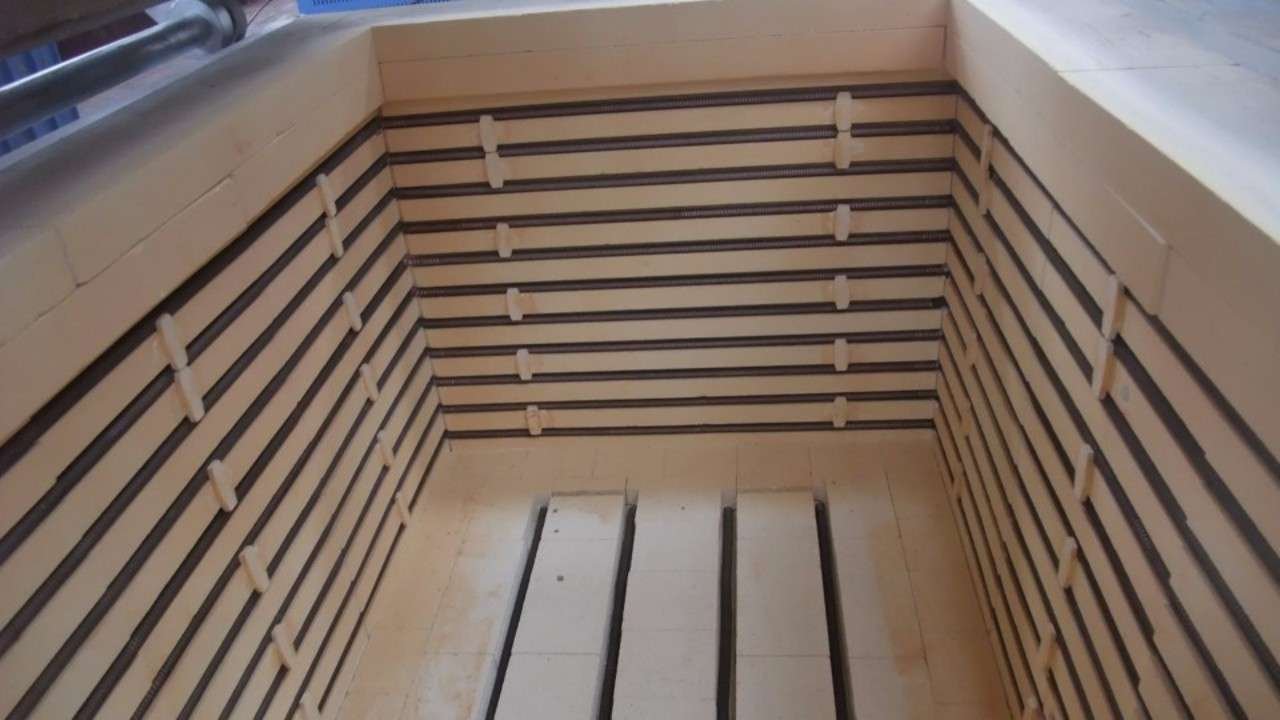 Elementos de aquecimento de carboneto de silício para aplicações de alta temperatura
Property 2: Superior Wear & Abrasion Resistance
Hardness forms the foundation of silicon carbide’s wear performance. It outlasts most common structural materials in abrasive environments.
Hardness & Wear Mechanism
Silicon carbide has a Mohs hardness of 9.5. This number is second only to diamonds and cubic boron nitride.[3] Because of this, silicon carbide offers very high wear resistance, erosion resistance, and resistance to particle abrasion.
In normal applications of abrasive slurries, silicon carbide gives service life that is 10~20 times more than cast iron and 3~5 times more than alumina ones.
Wear-Focused Use Cases
In cases where the work process involves abrasives, you can use silicon carbide to minimize the maintenance interval.
You may employ SiC lining, impellers, and mechanical seal components for slurry pumps, mining equipment, and sand processing facilities. It is also suitable for nozzles of sandblasters and waterjets.

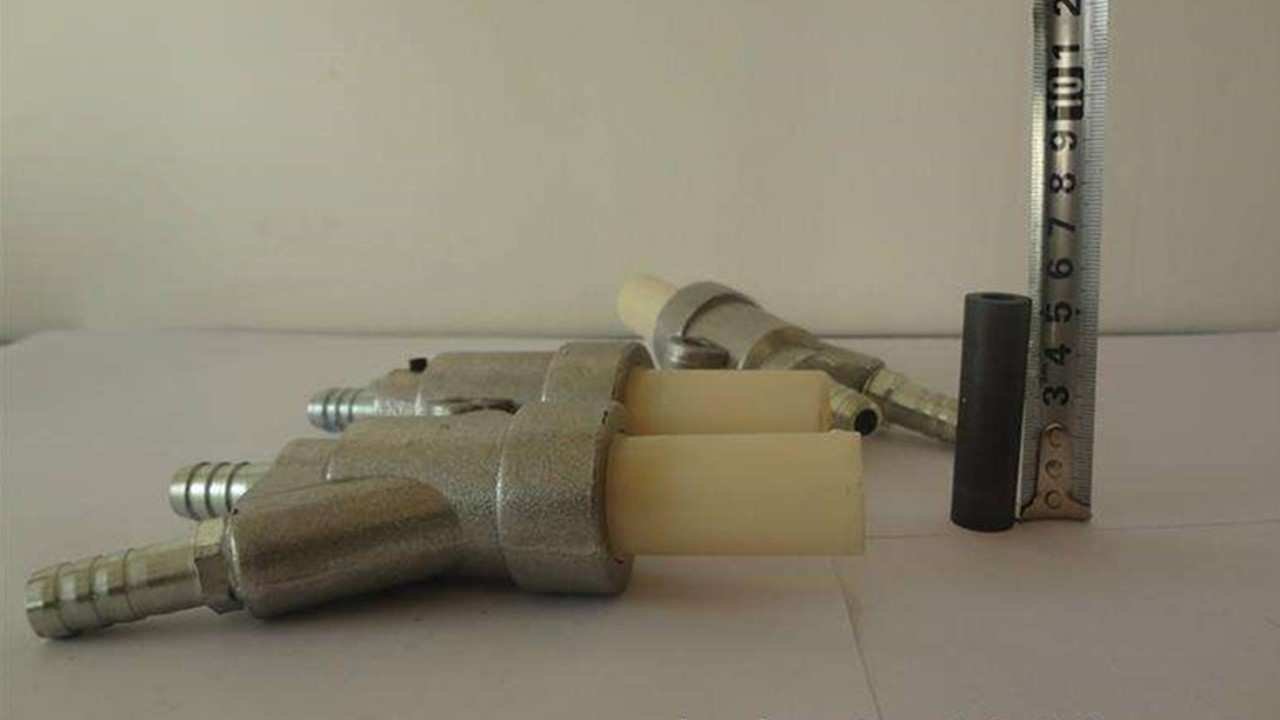 Newthink Silicon Carbide Sandblasting Nozzles
Property 3: Excellent Corrosion Resistance
Many industrial processes involve harsh chemicals that quickly degrade metals. Silicon carbide has good chemical inertness, which makes it reliable for equipment exposed to corrosive fluids and gases.
Resistência química
Silicon carbide is stable against most inorganic and organic acids, alkalis, and molten salts at moderate temperatures. It is stable in an oxidizing as well as a reducing atmosphere and will not react with most processing chemicals, except for hydrofluoric acid, and concentrated strong alkali solutions at temperatures above 300℃.[1]
Corrosion-Prone Applications
If your processes handles corrosive slurries or chemical vapors, silicon carbide avoids rust, pitting, and degradation that plague metal parts.
You will benefit from SiC sealing rings ou forros in chemical processing pumps, reaction vessels, and pipeline linings. It also suits desalination equipment and flue gas desulfurization systems.

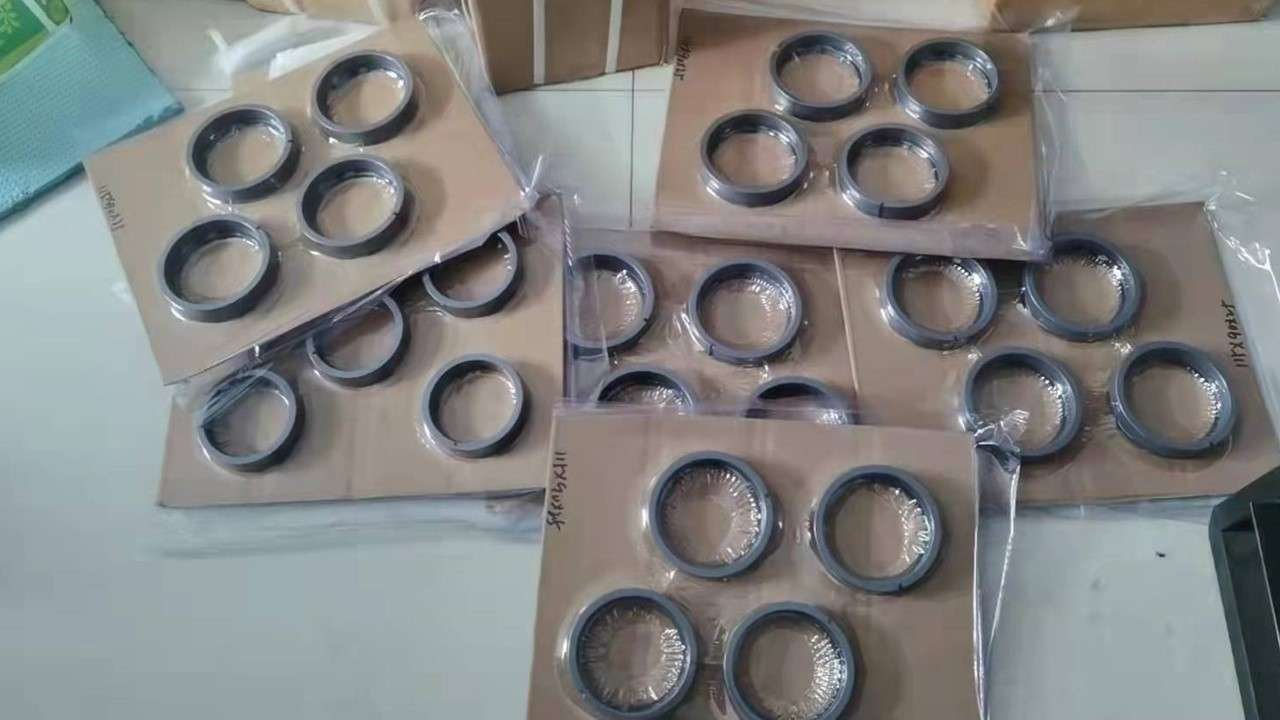 Newthink Silicon Carbide Seal Rings Packaging
Property 4: Outstanding Thermal Conductivity
Efficient heat transfer is important for many industrial systems. Silicon carbide delivers exceptional thermal performance alongside its mechanical strength, rare among ceramic materials.
Thermal Conductivity Specifications
Sintered silicon carbide has a thermal conductivity of 120~200 W/m·K at room temperature. This is roughly 3~5 times higher than stainless steel and twice that of alumina ceramics.[4]
SiC also provides good thermal conductivity even at high temperatures, unlike many insulators that lose performance as heat rises.
Heat Transfer Applications
If your system requires a reduction in heat dissipation because of its effect on energy consumption and production quality, you can take advantage of silicon carbide. It will allow you to increase thermal efficiency without compromising durability.
SiC can be used for making trocadores de calor using tubes and plates in the chemical industry, energy, and food industries. Heat sinks in power electronics and semiconductor manufacturing can also benefit from using SiC.

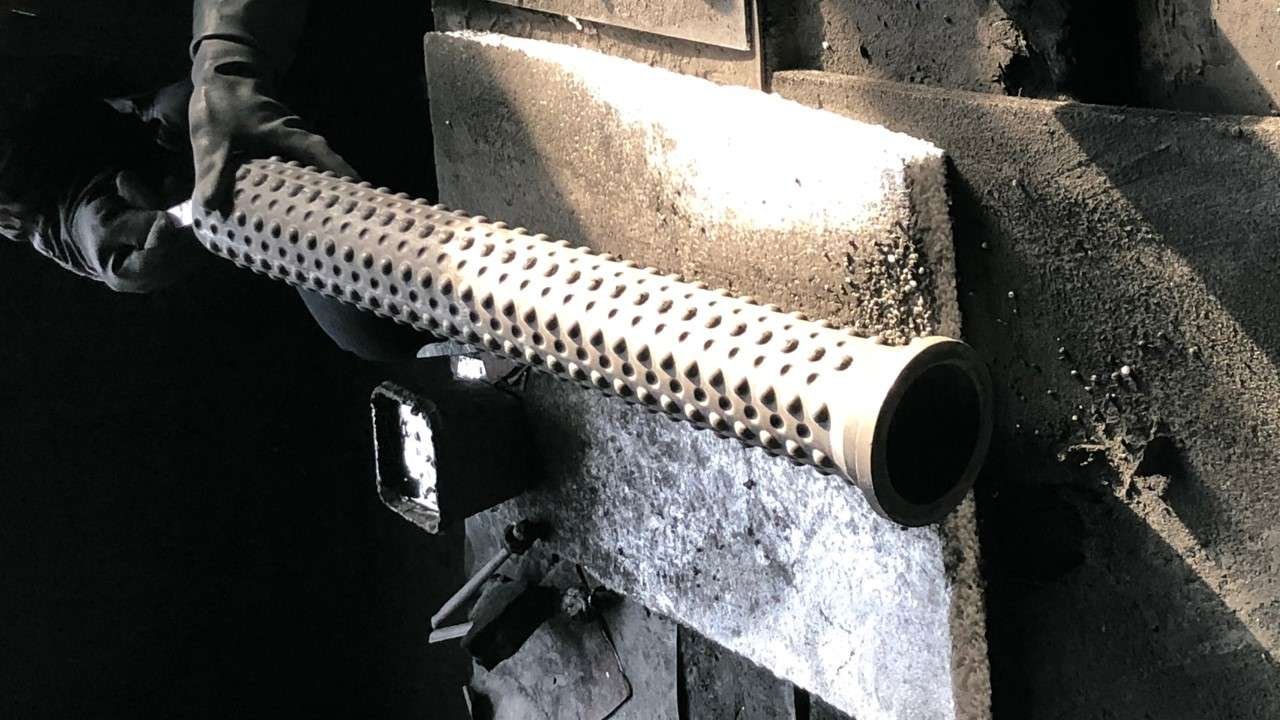 Newthink Silicon Carbide Heat Exchanger Production
Property 5: High Mechanical Strength
Besides being heat- and wear-resistant, silicon carbide is also a high-strength material that can handle heavy mechanical loads.
Strength and Stiffness
High-density sintered silicon carbide offers a flexural strength of 350~500 MPa, as well as a Young’s modulus of around 410 GPa. This gives it excellent dimensional stability, even under dynamic load and vibration.
Silicon carbide also possesses a low thermal expansion coefficient, roughly 4.0×10⁻⁶/℃, making it more resistant to thermal shock than most glass.
Structural Parts Applications
Silicon carbide is popular for applications that demand both strength and dimensional accuracy. It maintains stable performance over long service lives.
You can rely on SiC for structural supports, precision fixtures, and robotic end effectors in automated manufacturing. It also serves as wafer carriers and susceptors in semiconductor production.

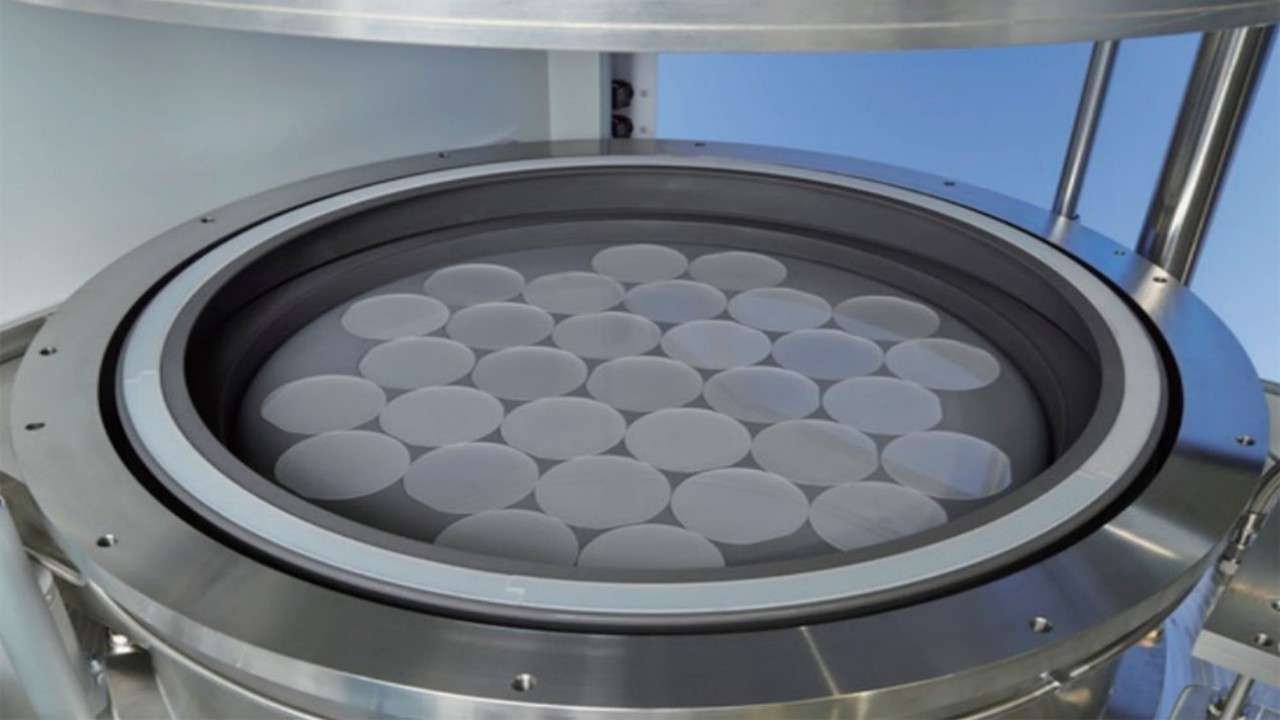 Silicon Carbide Wafer Tray for Semiconductor Manufacturing
Property 6: Tunable Electrical Properties
One of silicon carbide’s most neglected advantages is its flexible electrical behavior. This means SiC can be customized to act as an insulator or a semiconductor by your specific needs.
Material Formulation and Electrical Behavior
Pure, high-purity silicon carbide acts as an excellent electrical insulator with high dielectric strength. By adding controlled dopants during manufacturing, we can create SiC grades with semiconductor-level conductivity.[2]
Electrical and Electronic Use Cases
If you design electrical systems that need thermal stability alongside controlled conductivity, silicon carbide offers a customizable solution.
Insulating silicon carbide can be used for high-voltage insulators, surge arresters, and electronic packaging substrates.
Doped SiC serves in power semiconductor devices and electrostatic chuck components.
Perguntas frequentes
Is silicon carbide stronger than steel?
Yes. Silicon carbide has a higher specific strength than steel, meaning more strength per unit of mass. However, steel is more ductile and better for high-impact, shock-heavy applications.
What is the maximum temperature silicon carbide can handle?
Most industrial SiC grades operate continuously up to 1,600℃ in air. In inert or reducing atmospheres, they can withstand up to 2,200℃ without significant degradation.[1]
Is silicon carbide more expensive than alumina ceramics?
Yes. Higher raw material and processing costs drive the price difference.
Can silicon carbide be machined to tight tolerances?
Yes. But it requires diamond grinding tools due to its extreme hardness. Precision SiC components can achieve tolerances of ±0.001 mm or better.
Does silicon carbide react with hydrochloric or sulfuric acid?
No, even at elevated concentrations and temperatures. It only reacts with hydrofluoric acid and very strong hot bases.
What are the main types of industrial silicon carbide?
The most common grades are reaction-bonded SiC, pressureless-sintered SiC, and hot-pressed SiC. Each differs in density, strength, and cost to suit different application requirements.
Conclusão
Silicon carbide’s unique combination of high-temperature stability, wear resistance, corrosion resistance, thermal conductivity, mechanical strength, and tunable electrical properties makes it one of the most versatile advanced ceramics available today.
If you are evaluating silicon carbide for your next equipment upgrade or new product design, you can work with Novos Materiais. We can help you select the optimal grade and geometry for your specific application.
Obrigado pela leitura. Espero que este artigo tenha sido útil.


 Portuguese
 English
 Spanish
 German
 Arabic

